OpenBlend
Redesigning the 1:1 experience for 300k users, contributing to 40% revenue growth
- Role
- Product Designer
- Duration
- 6 months
- Team
- 1 UX designer1 Product manager4 Software Engineers2 QA Engineers
- My contributions
- ResearchUI designUX DesignTesting
Redesigning the 1:1 experience for 300,000 users
A 1:1 meeting is a manager's most important tool for driving performance and engagement — but OpenBlend's 1:1 feature was clunky, difficult to use, and causing customers to churn. As the sole designer on the Enterprise Product team, I led the end-to-end redesign of the Prepare and Guide phases of the 1:1 experience over eight months, collaborating closely with a Product Manager. The new experience launched globally on October 14, 2024.
The redesign in numbers
1:1 booking rate
Bookings increased by 60% after launch
More managers were scheduling 1:1s directly within OpenBlend than ever before. The simplified booking flow removed the friction that was pushing conversations outside the product.
Recurring 1:1s
Recurring meetings up by 32% post-launch
Users were not just booking more — they were committing to regular cadences. The new scheduling control turned one-off meetings into consistent habits.
Agenda completion
Agenda prep rate grew by 24%
More users were preparing agendas before entering their 1:1s. Smart suggestions and the shared agenda view made preparation feel effortless rather than optional.
Revenue growth
Contributed to 40% revenue growth in 6 months
The redesign directly supported OpenBlend's retention strategy. Improved engagement across the 1:1 tool contributed to significant revenue growth within three months of launch.
A tool that was supposed to help, but didn't
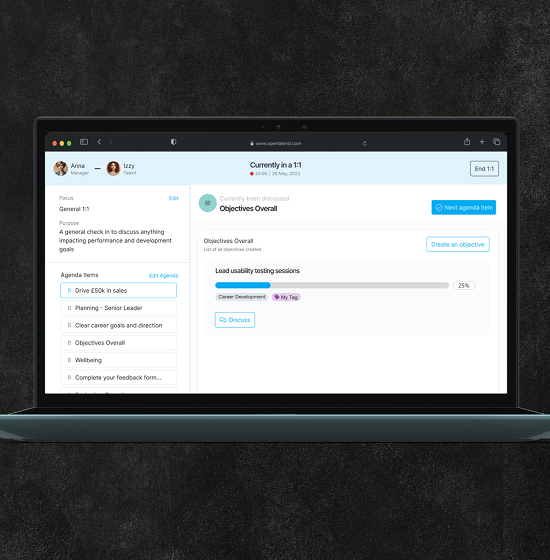
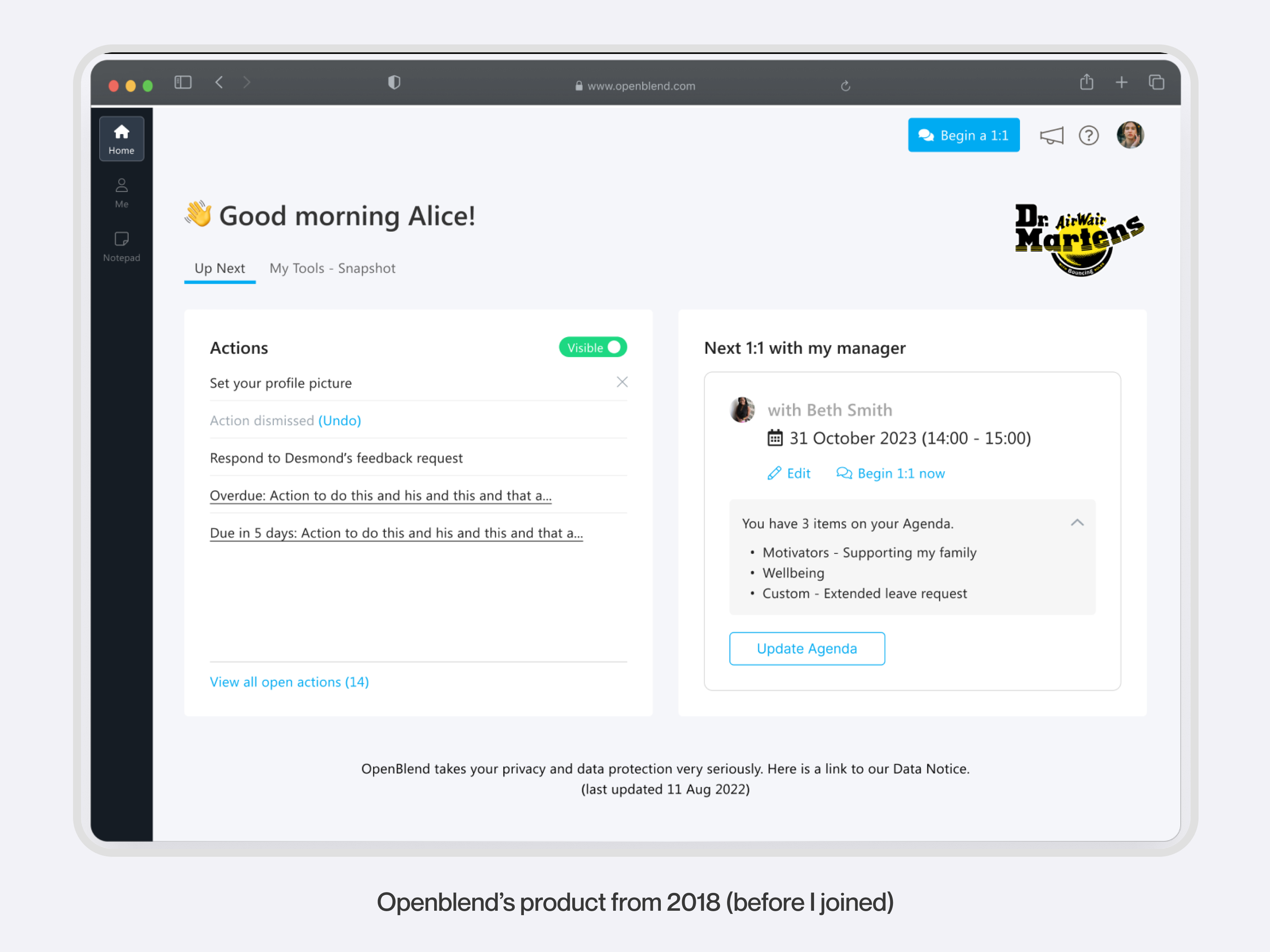
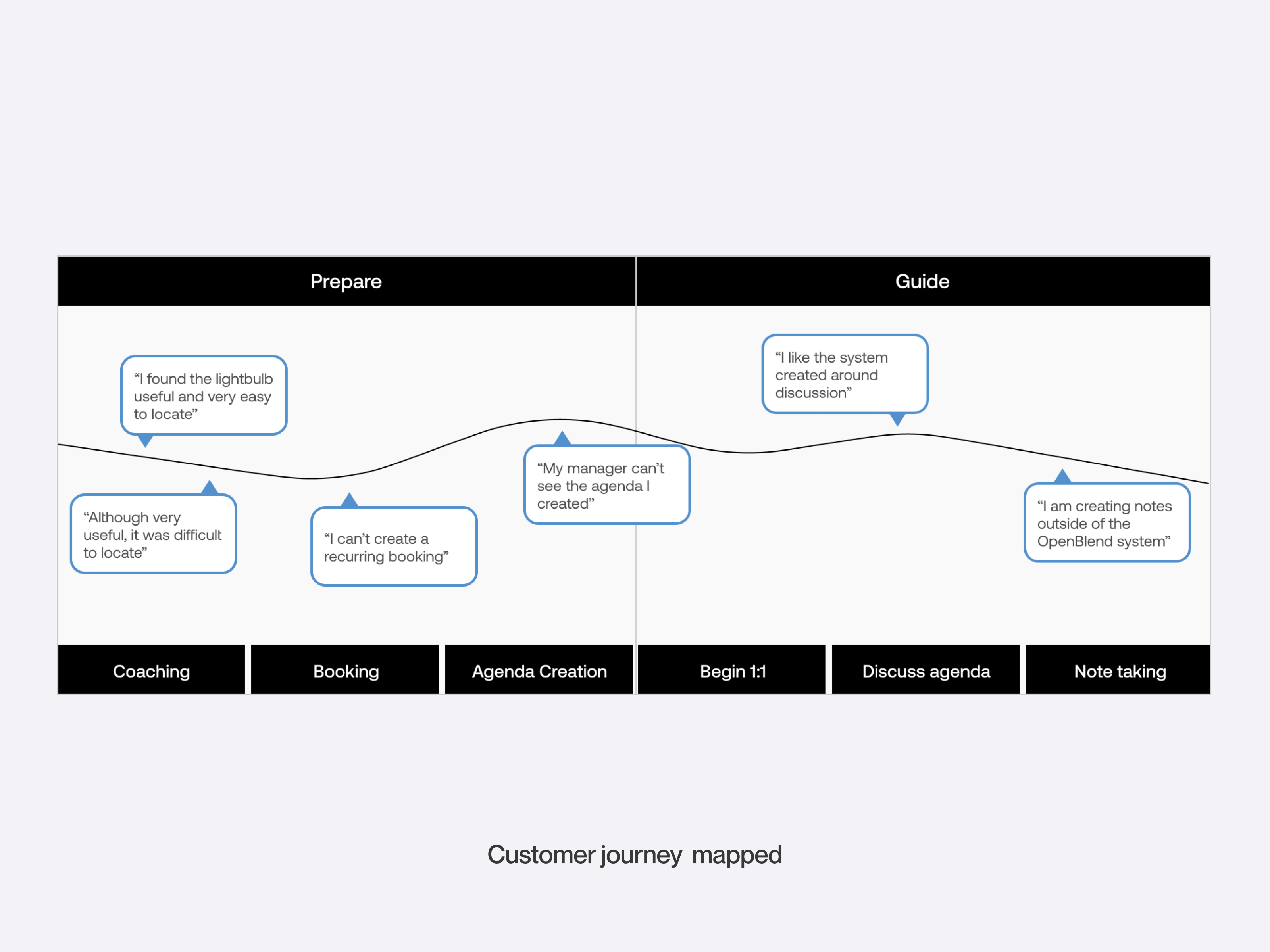
OpenBlend's 1:1 feature had been live since 2018 — but it never gained the traction it needed. Managers and employees found it difficult to use, leading them to hold their 1:1s outside the product entirely. What was meant to be OpenBlend's most valuable feature had become its biggest retention risk.
Why it matters
1:1 conversations are the backbone of team performance and engagement. When the tool meant to support them fails, the cost isn't just product abandonment — it's customer churn, lost revenue, and a direct threat to the business's long-term success.
Complex navigation
The journey to reach a direct report's 1:1 was long and frustrating, discouraging regular use.
Rigid scheduling
Booking a 1:1 was too difficult, pushing conversations outside of OpenBlend entirely.
No shared agenda
Managers and talents prepared agendas separately, entering meetings without a clear view of each other's priorities.
No note-taking
Users had to rely on notepads — digital or paper — to log outcomes from their conversations.
Getting under the skin of the problem
At the start of the project, we only had surface-level feedback from the customer experience team. I partnered with the Product Manager to go deeper — combining qualitative research with product analytics to build a complete picture of how users were actually behaving.
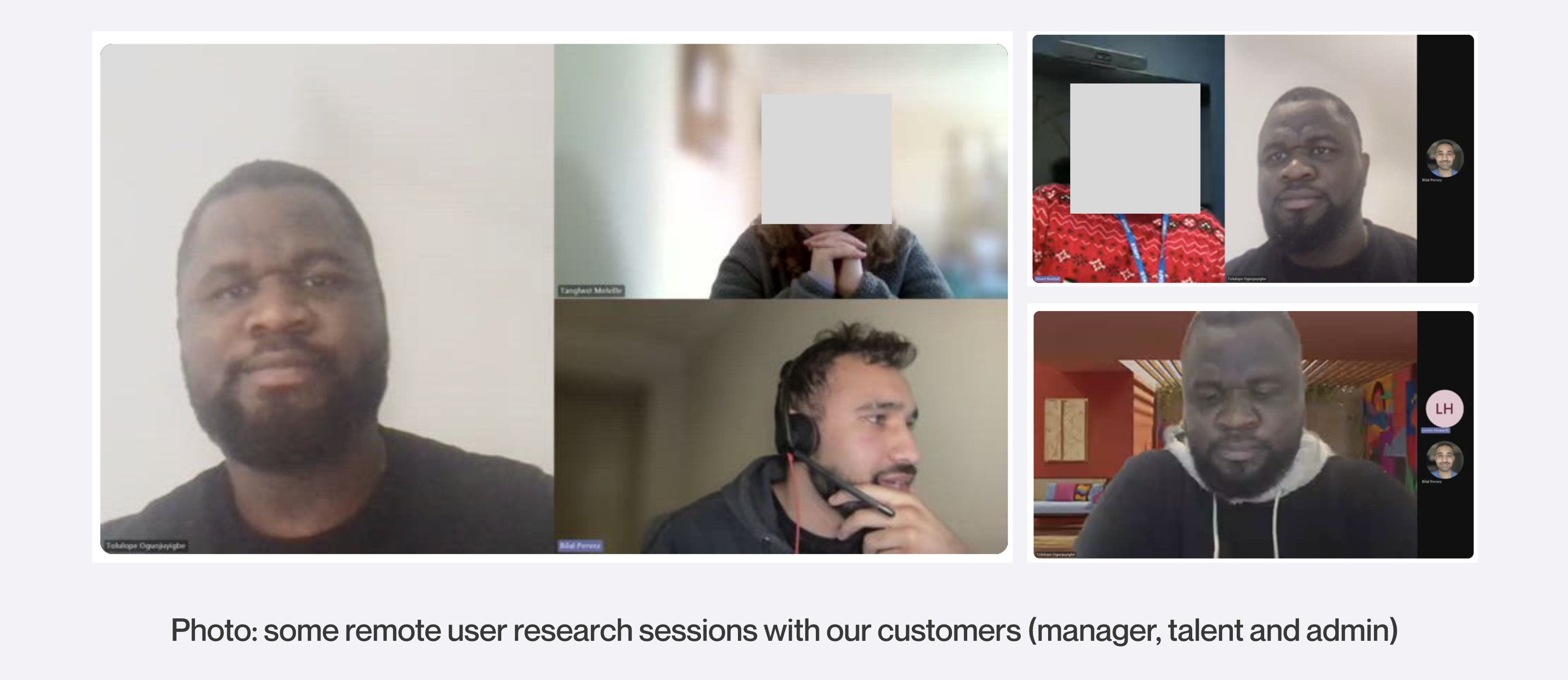
Customer interviews
Spoke with 14 customers across three user types — Talents, Managers, and Admins — from various companies to understand how they approached 1:1 preparation and guidance.
Mixpanel analysis
Analysed event data to measure drop-off rates across key actions, revealing where users were abandoning the experience before completing their desired actions.
Agenda preparation was being skipped: Most users entered 1:1s without preparing an agenda — removing structure before the conversation even started.
Only 45% of agenda topics were discussed: Even when agendas existed, fewer than half the items were actually covered during the meeting.
Regular bookings were rare: Users were booking far fewer recurring 1:1s than expected, limiting the consistency of conversations.
Notes were taken elsewhere: Users relied on external notepads to capture outcomes, meaning key takeaways were lost outside the product.
Defining what a good 1:1 actually looks like
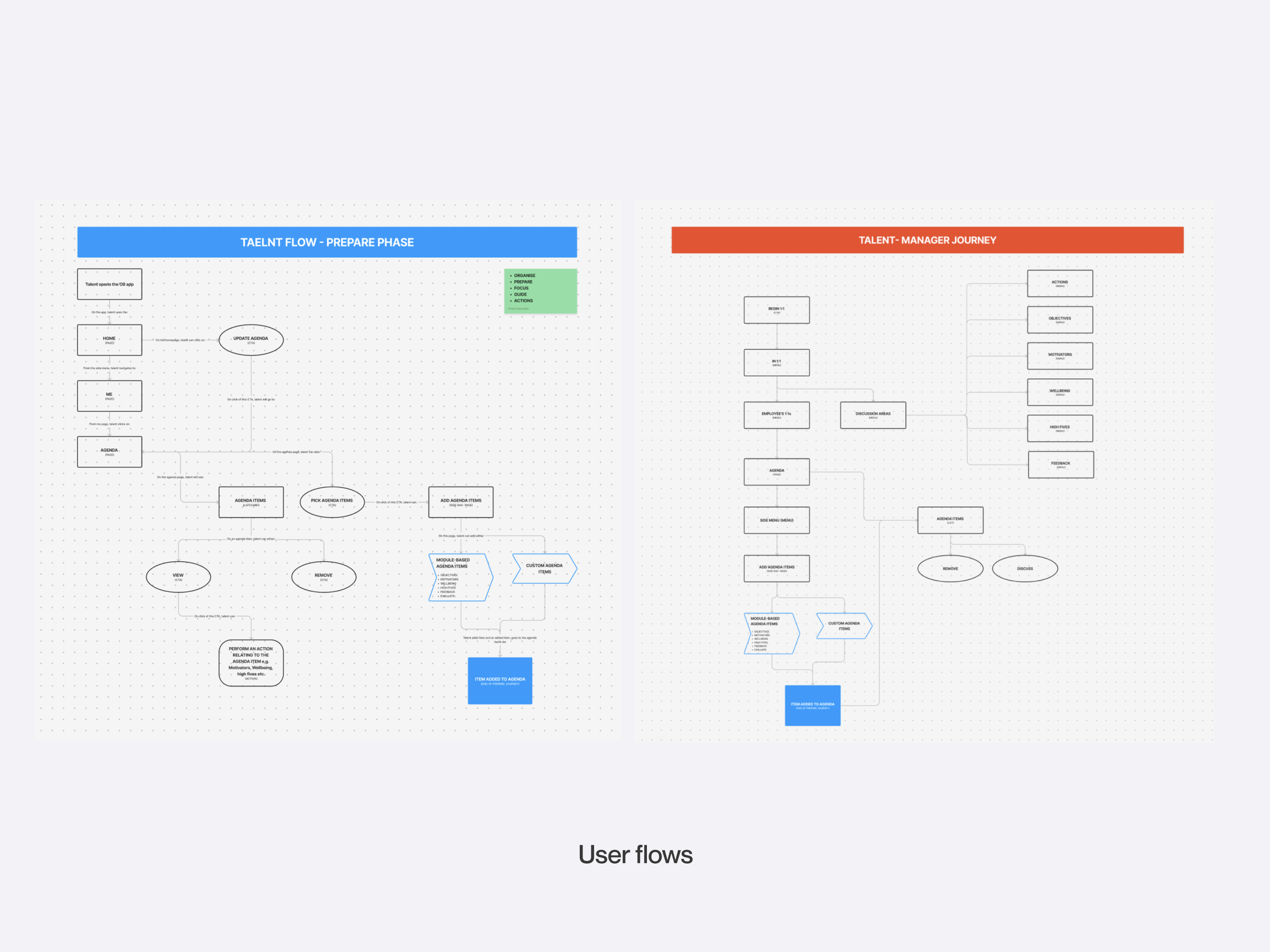
Before designing anything, I needed to define what success looked like. Together with the Product Manager, I broke the 1:1 journey into two distinct phases — Prepare and Guide — each with its own desired actions and success metrics. This framework became the foundation for every design decision that followed.
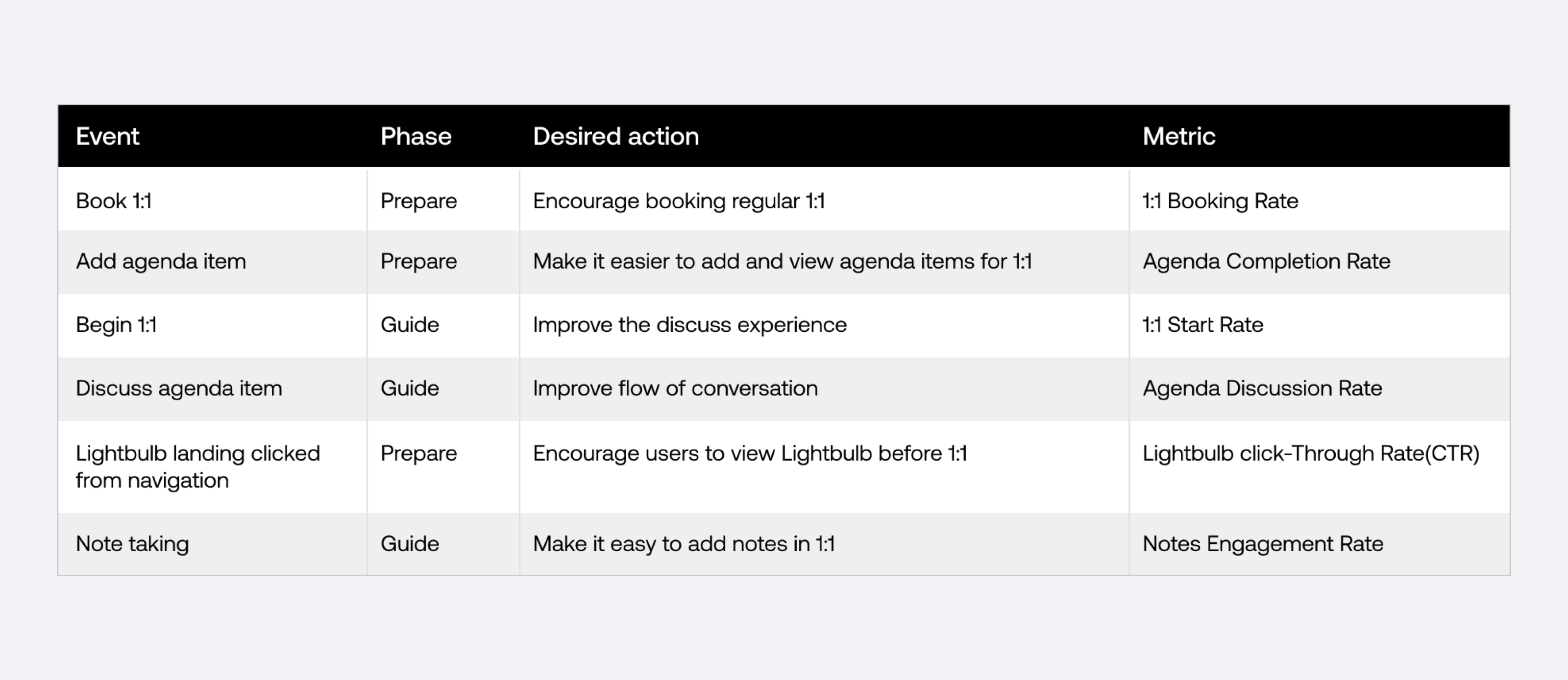
Prepare phase
Everything that happens before a 1:1 begins — booking meetings, building the agenda, and reviewing relevant context. The goal was to make preparation so effortless that skipping it felt like the harder option.
Guide phase
Everything that happens during the conversation itself — discussing agenda items, following a structured flow, and logging key takeaways. The goal was to make the conversation feel focused, purposeful, and worth having inside OpenBlend.
Designed with clear intent
Design for retention. Every decision had to give users a reason to stay in OpenBlend — not take their conversations elsewhere.
Design for quality and quantity. More 1:1s matter, but only if they're better 1:1s. Both had to improve together.
Design for ease. If preparation feels like work, users won't do it. Every interaction had to feel effortless.
Built around two phases, one goal
The solution was structured around the Prepare and Guide framework — designing each phase as a distinct but connected experience. Every feature mapped directly to a use case, user or business objective identified in discovery.
Prepare phase
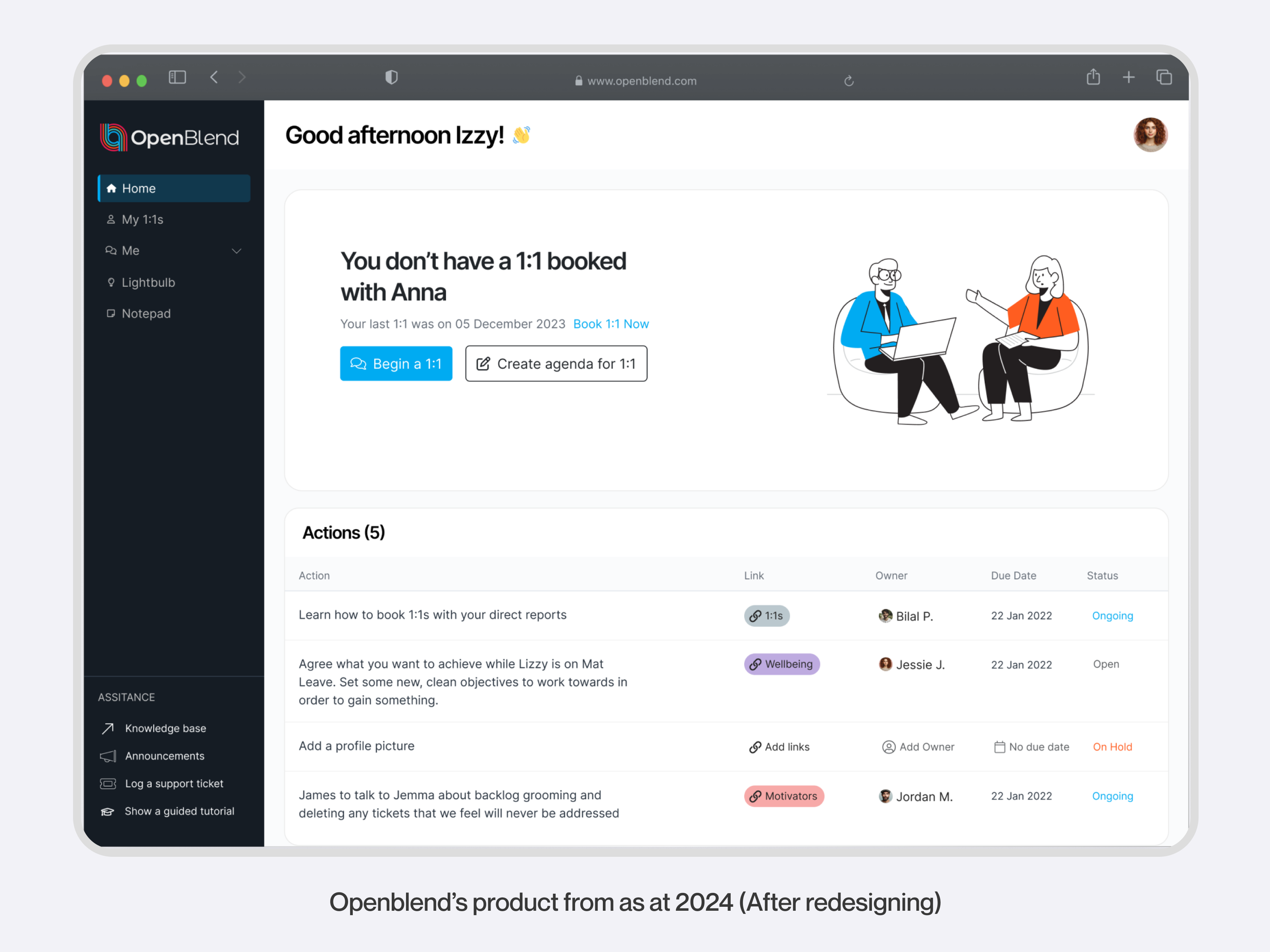
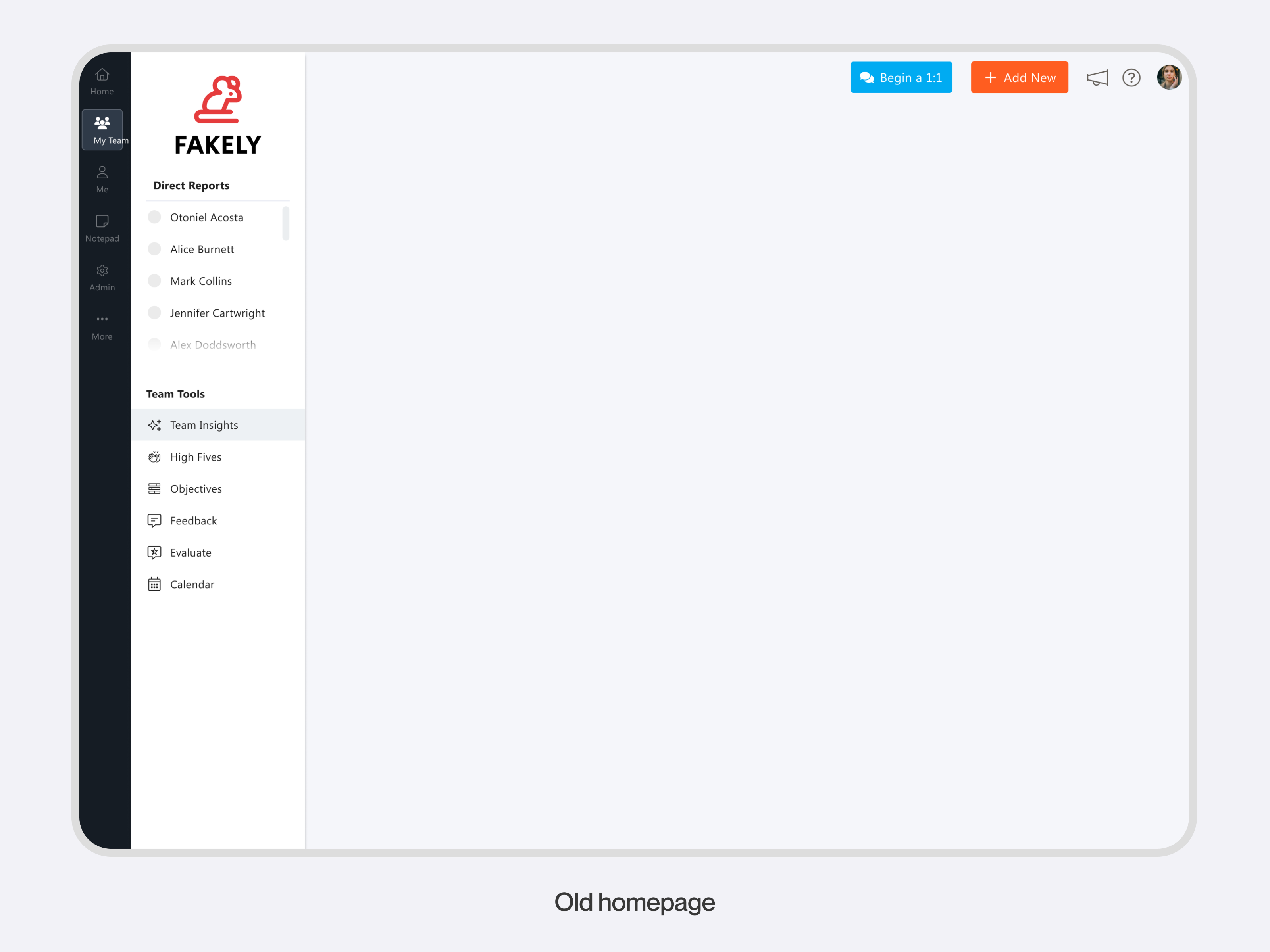
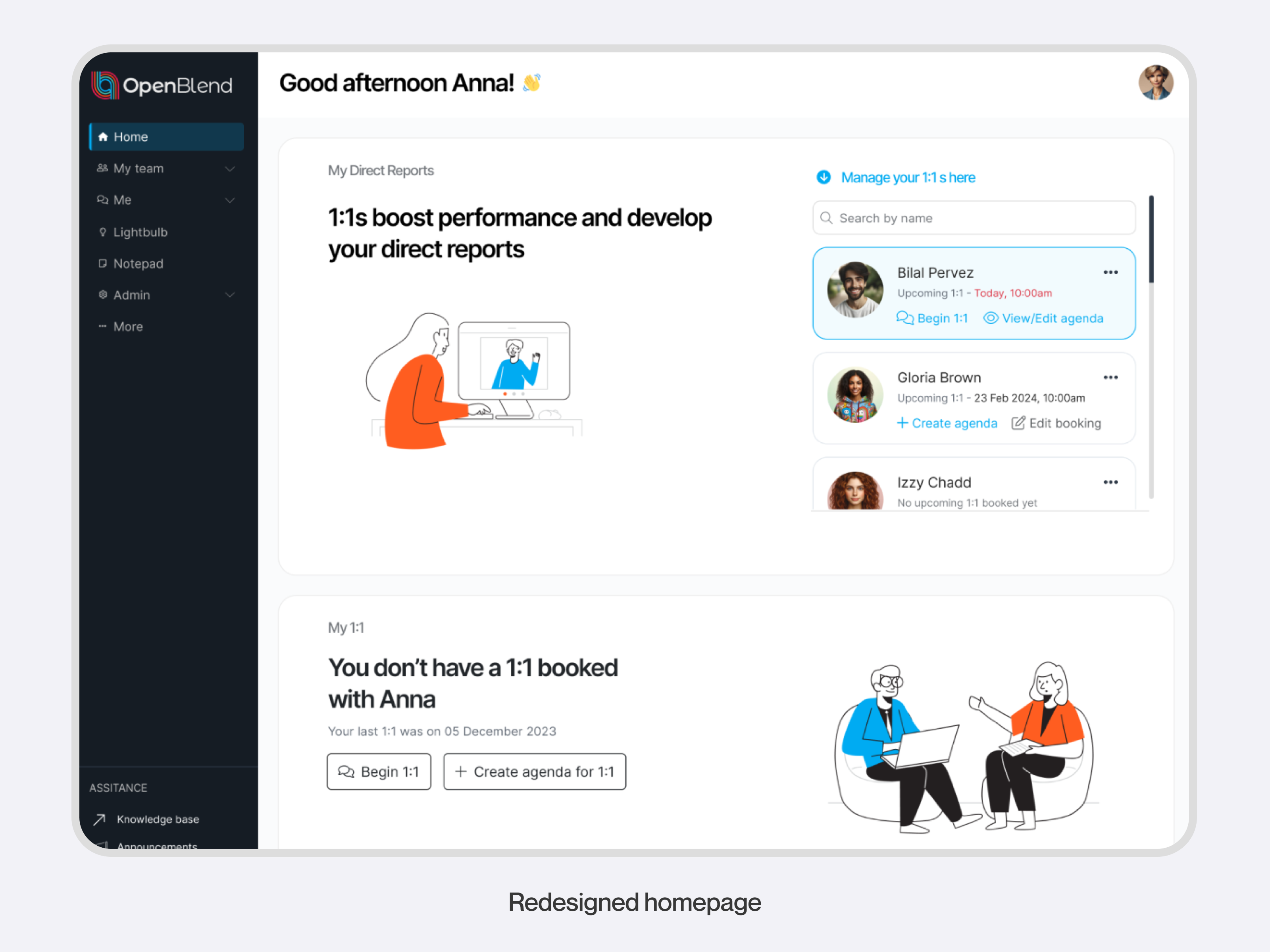
Simplified homepage
Consolidated all key manager actions — booking a 1:1, creating an agenda, viewing latest snapshots — into a single homepage. Removed the long, frustrating navigation journey that was discouraging managers from using the product regularly.
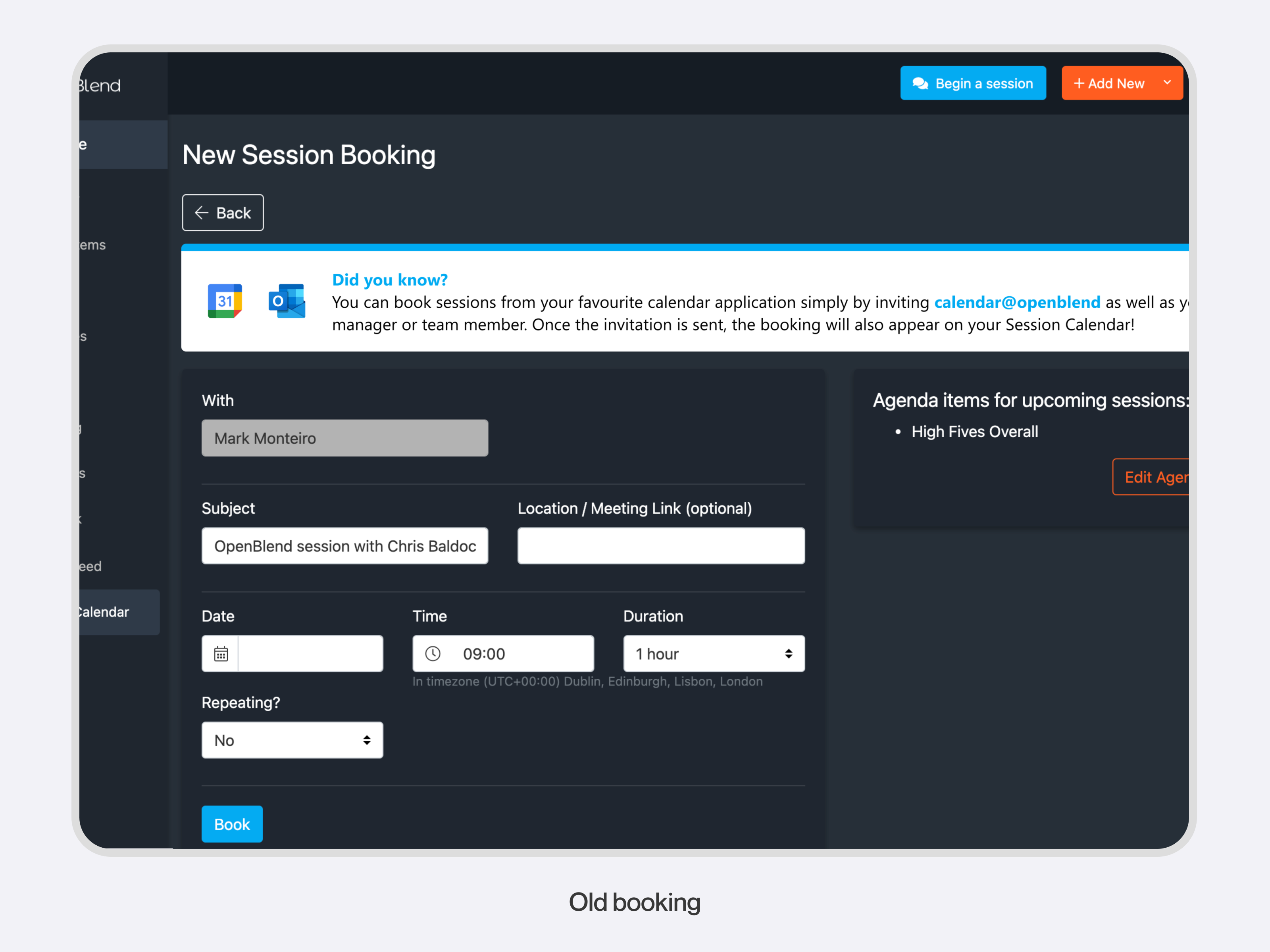
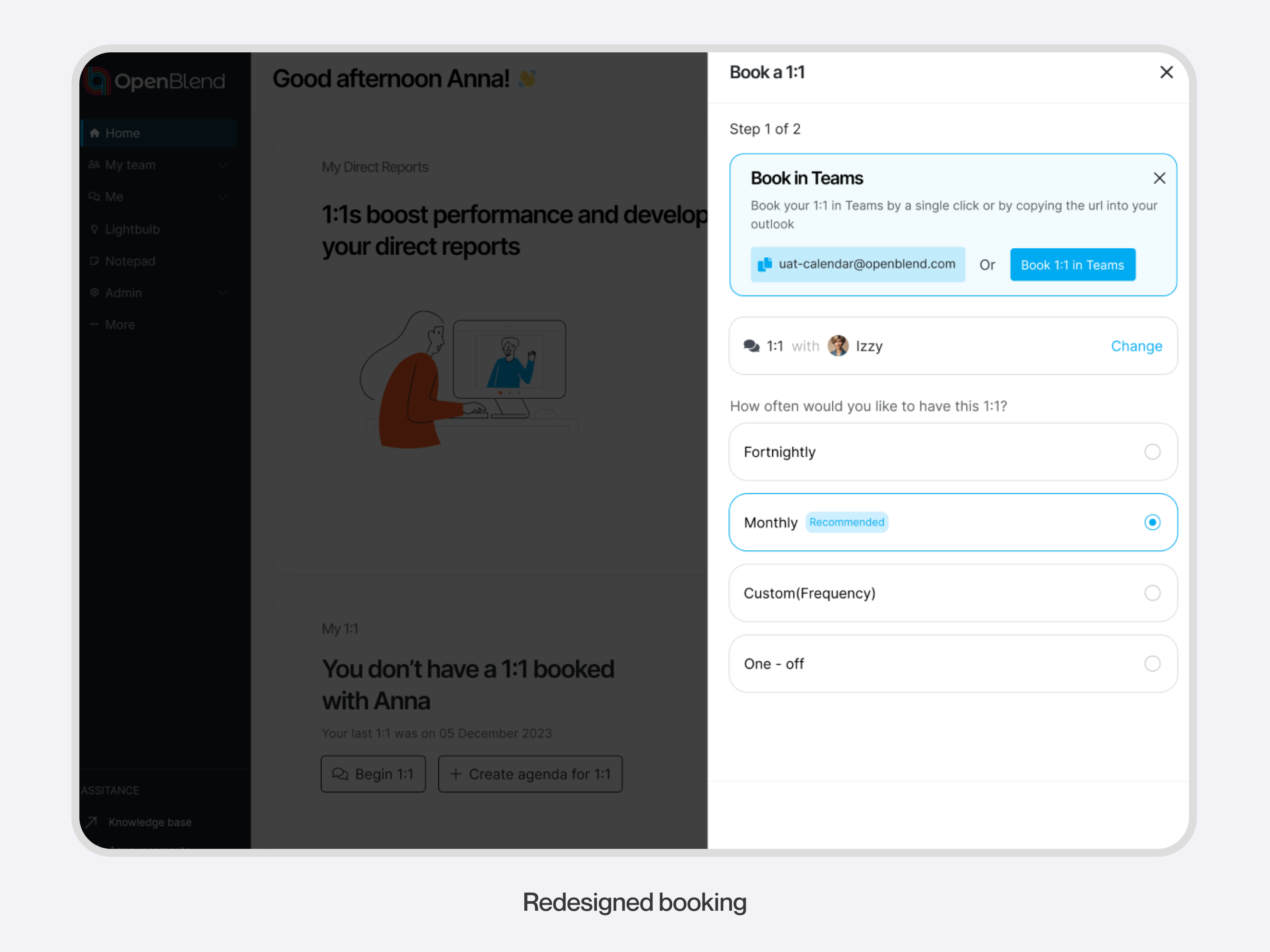
Flexible booking flow
Allows users to set recurring 1:1 cadences with full control over frequency, start, and end dates. Encouraged regular meetings inside OpenBlend rather than pushing conversations to external tools.
Agenda preparation
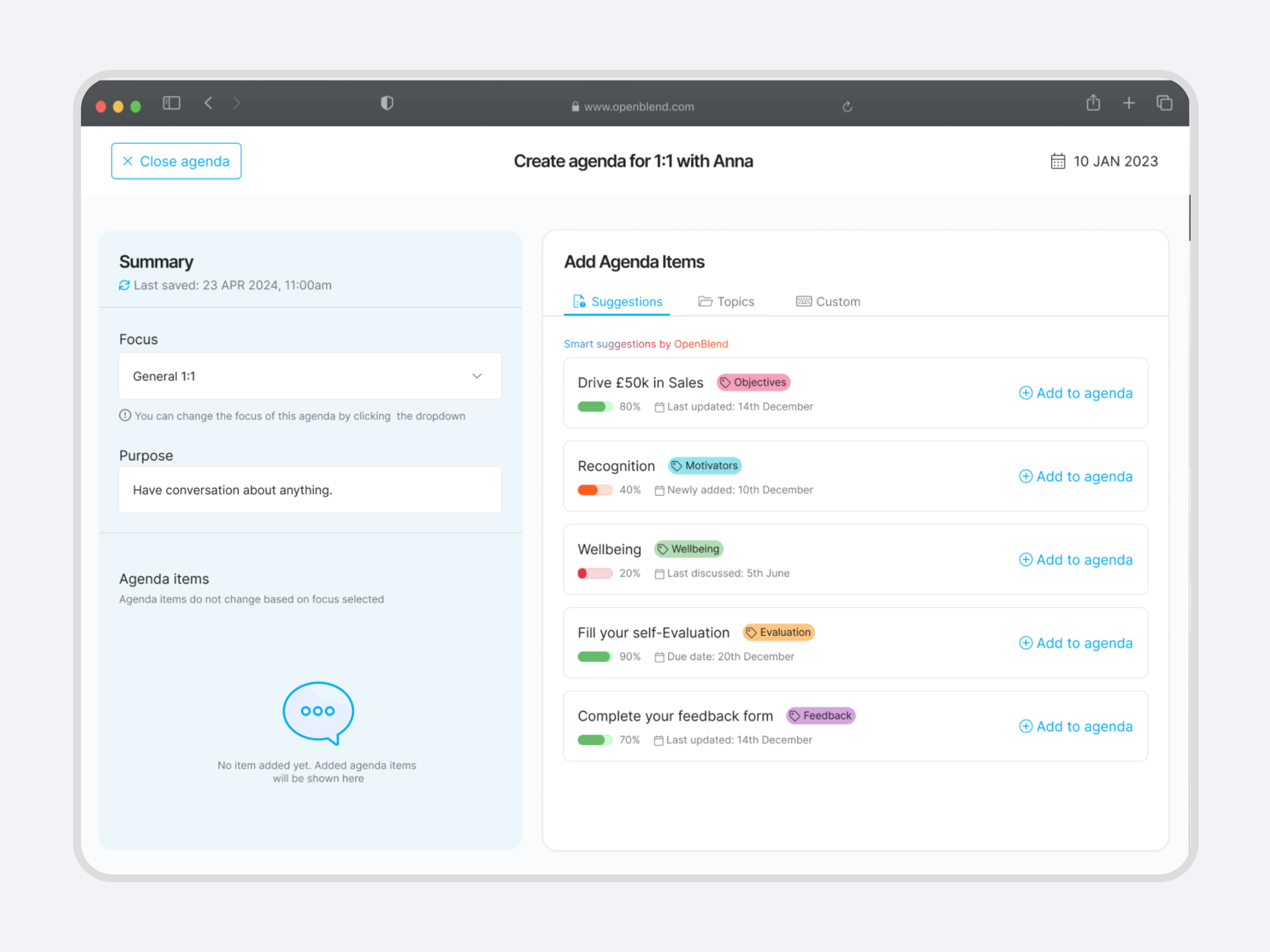
A full-screen preparation experience with AI-powered instant suggestions, custom defaults, and custom options — sharable between team manager and talent. Made agenda prep feel productive rather than optional, and gave both parties a unified view before the meeting.
Guide phase
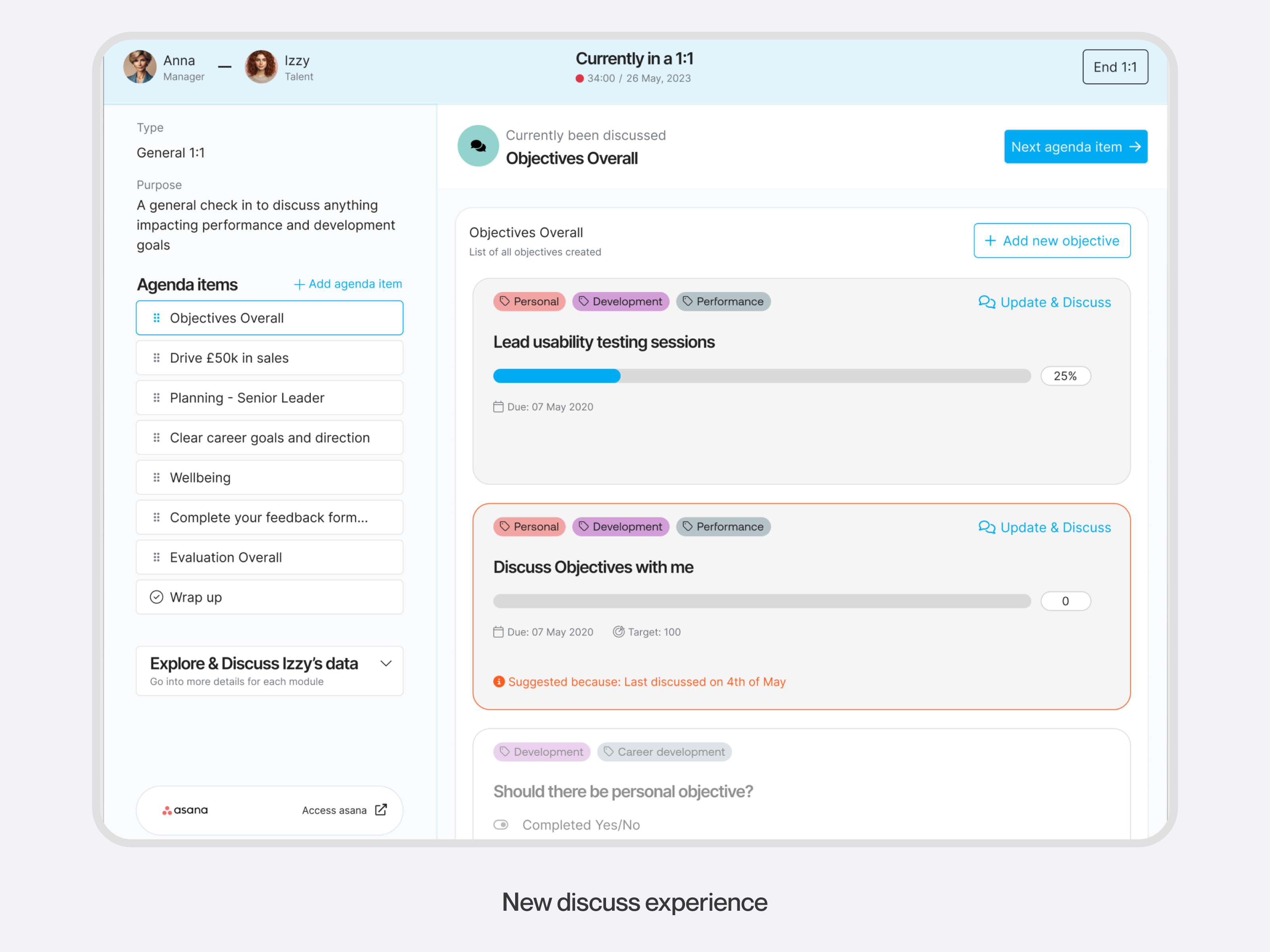
Immersive discuss experience
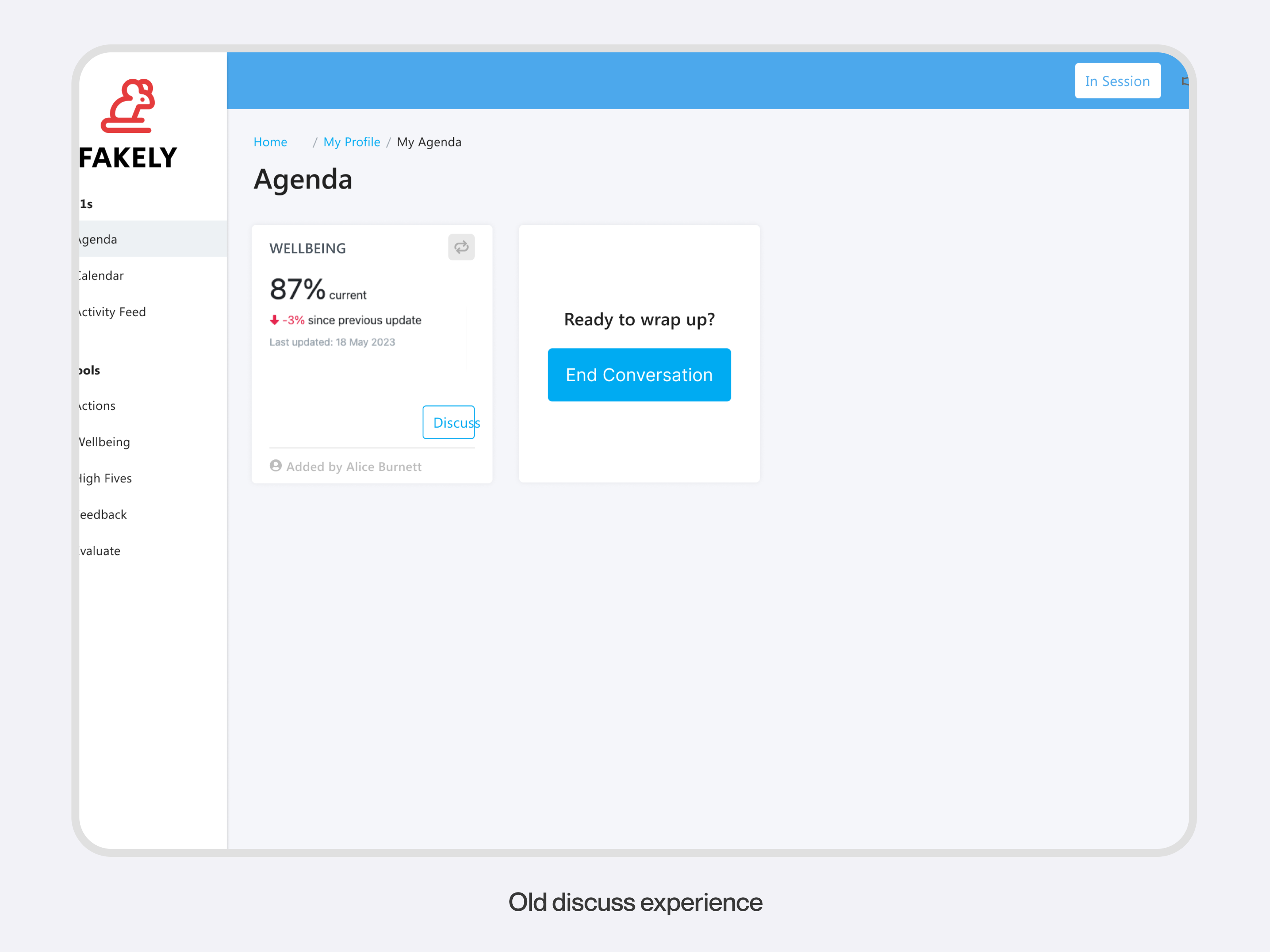
Splits the 1:1 page into an agenda panel and a discussion panel, with embedded ease, dialog and space for notes and action points. Kept conversations structured and focused on the conversation itself.
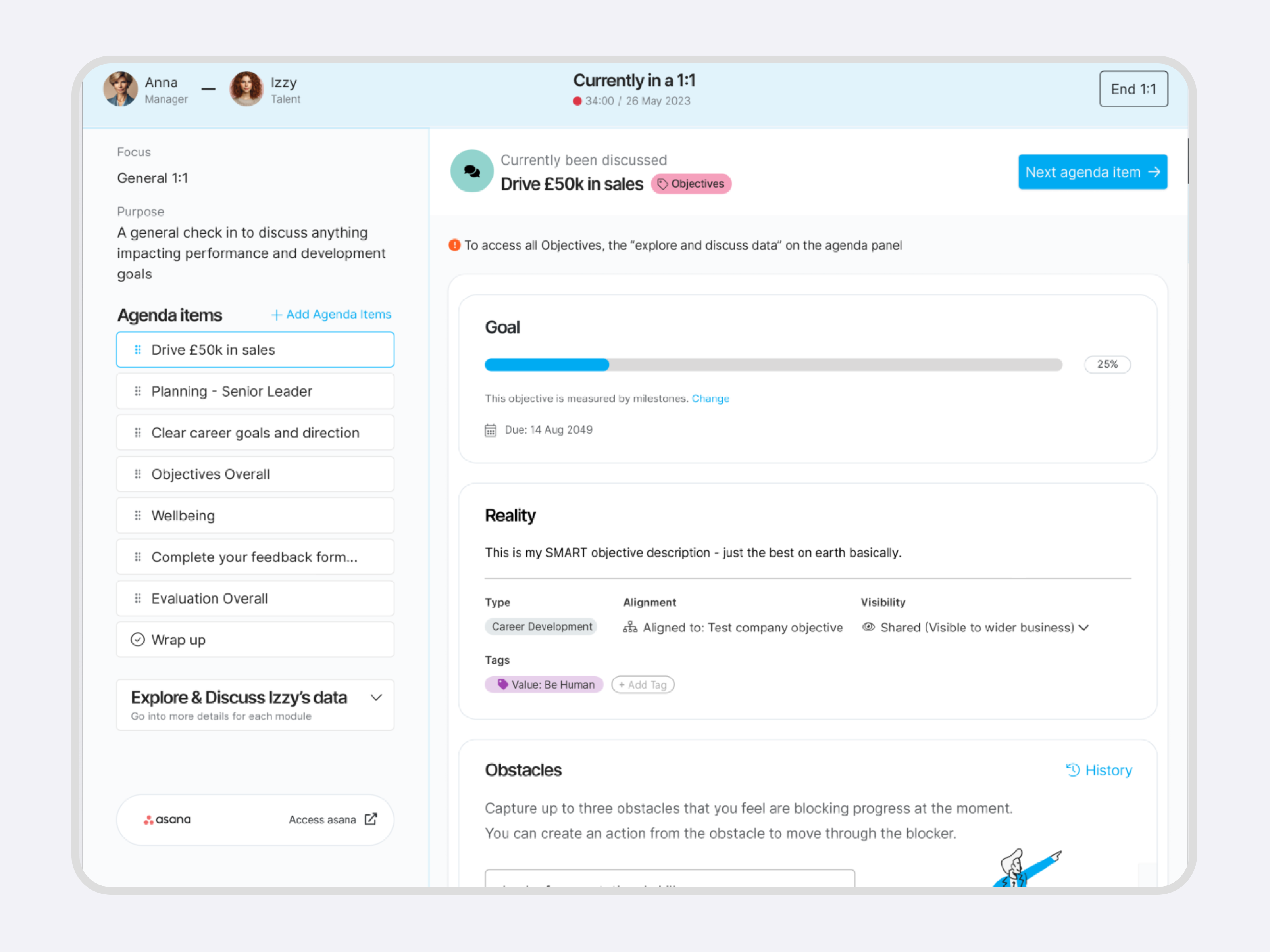
GROW model
A conversation framework developed with a leadership coach — Goal, Reality, Obstacles, Way forward — embedded into each agenda item with a video feature in the Way Forward section. Gave managers and talents a shared language for structuring meaningful conversations and capturing outcomes.
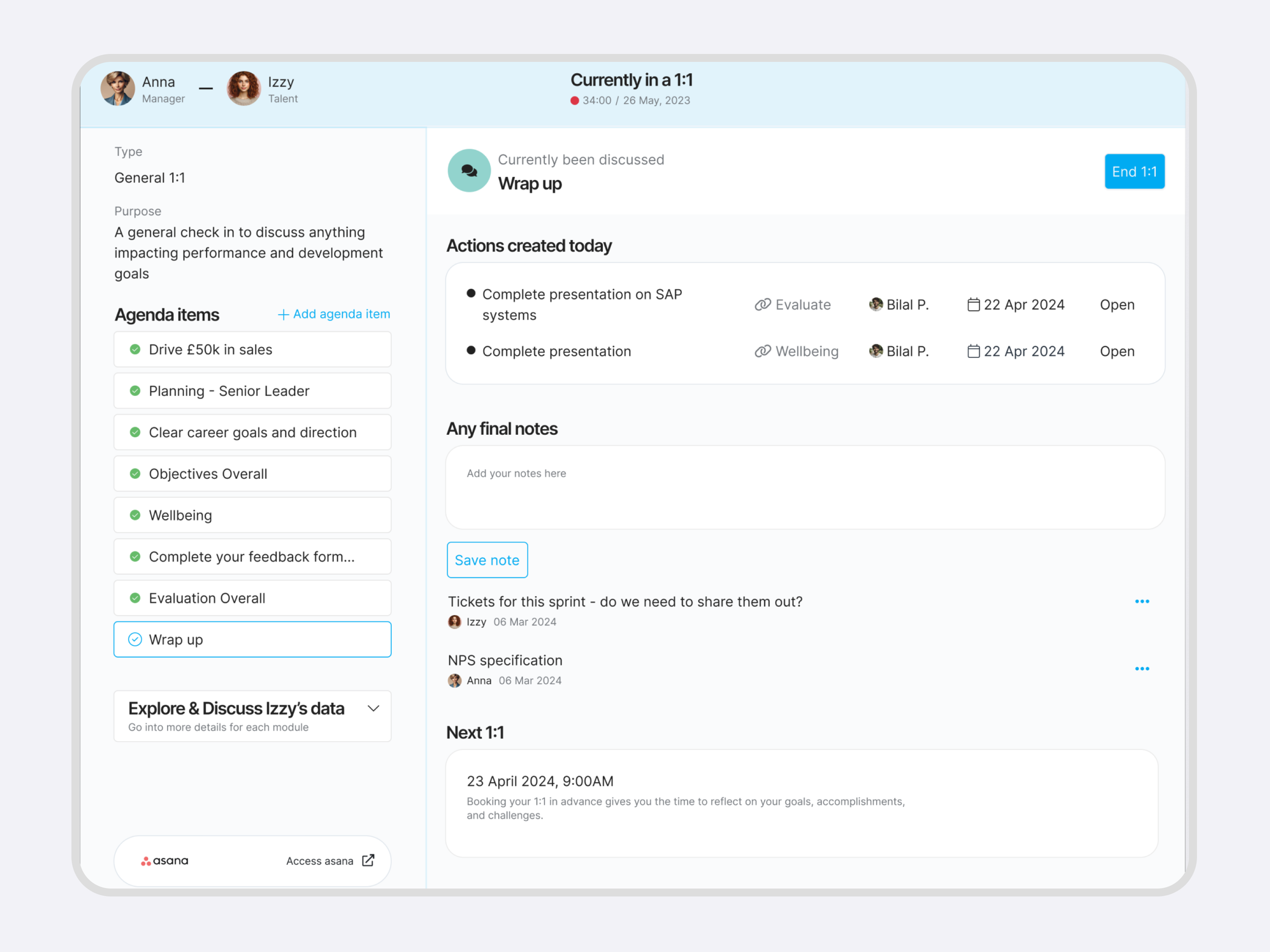
Wrap up page
Summarises all notes, action items, and the date of the next 1:1, like a brief every conversation. Solved the note-taking problem entirely — key takeaways were now captured and accessible inside the product.
Pressure tested inside and out
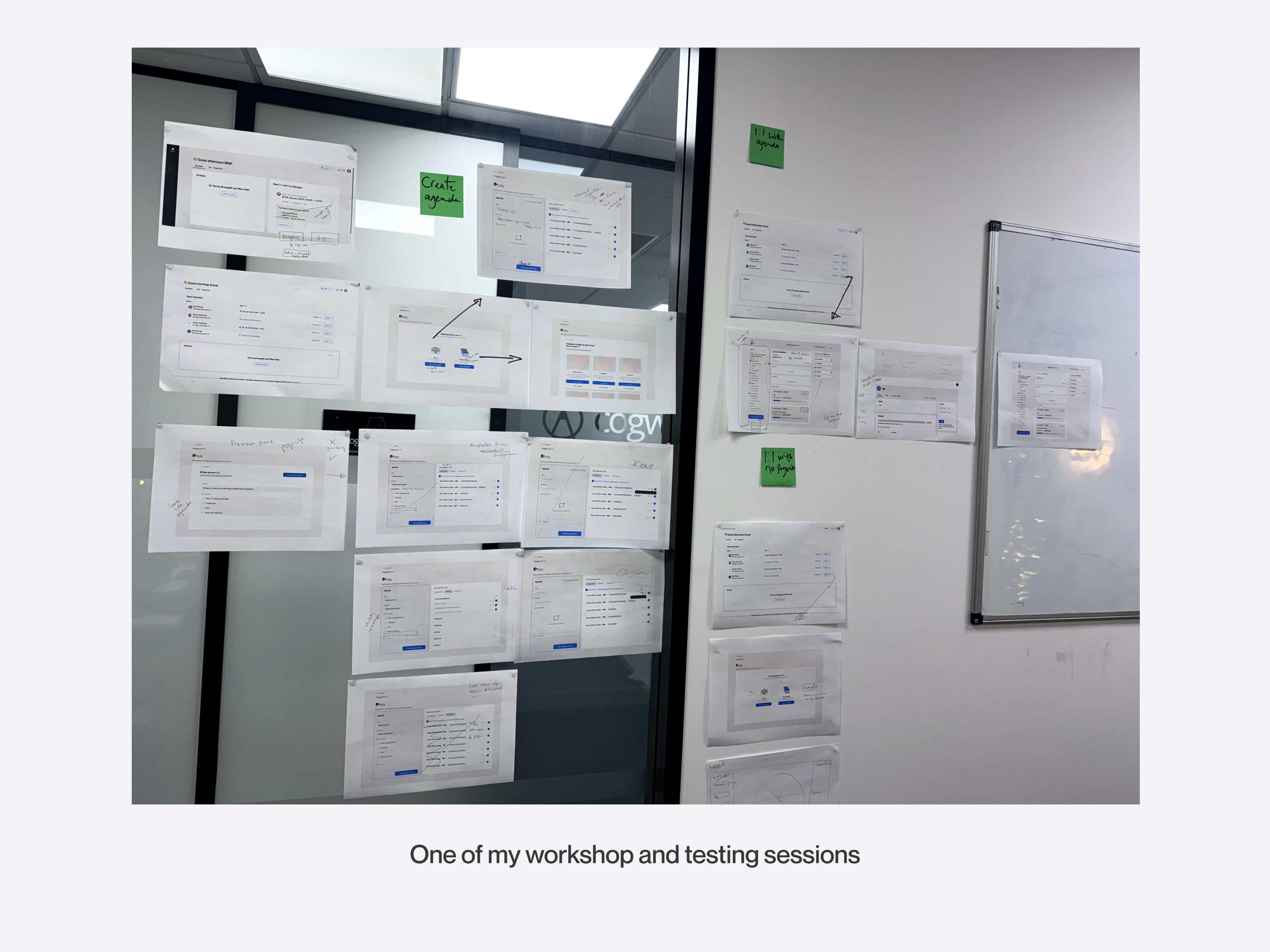
I tested multiple iterations of the Prepare and Guide experience with both internal staff and external customers — including managers, talents, and admins. The feedback was largely positive but surfaced two clear areas for improvement.
Too many clicks to add an agenda item
Streamlined the agenda creation flow to reduce the number of steps required to add an item. Friction in preparation was the core problem we were solving. Any unnecessary clicks in the agenda flow worked directly against that goal.
Focus and purpose needed to inform smart suggestions
Connected the focus and purpose fields to the AI smart suggestions, so recommendations were contextually relevant to the user's stated goals. Smart suggestions were only valuable if they felt personal. Linking them to the agenda's purpose made the feature significantly more useful.
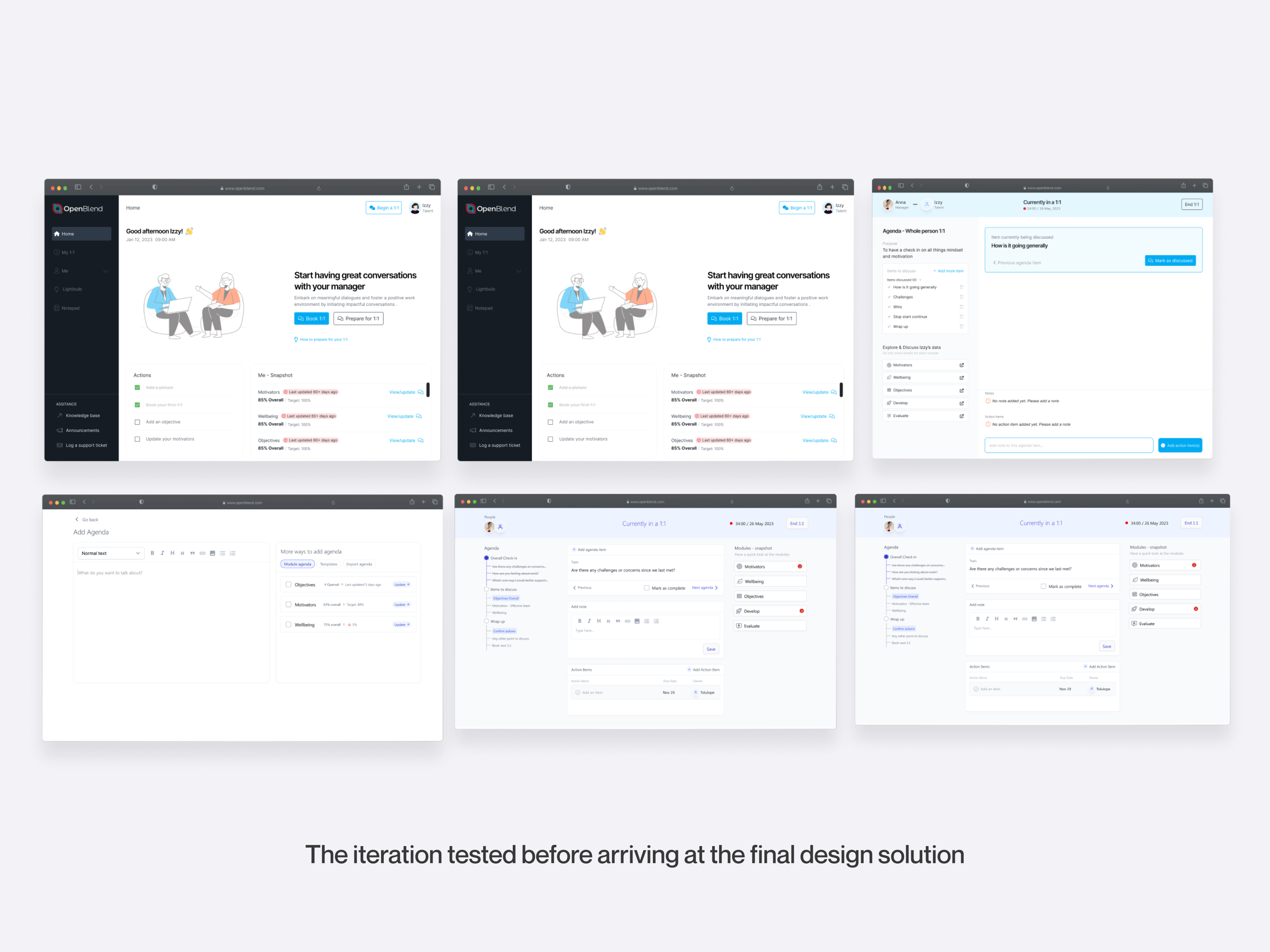
The work behind the screen
A selection of screens that didn't make the main story but were equally important in shaping the final experience.
Eight months. Here's what stayed with me.
This was the most complex project I'd worked on at OpenBlend — a complete redesign of the product's most critical feature, shipped to 300,000 users. It tested every part of my process, from research to launch collaboration, and pushed me to think beyond design into the wider business impact.
Data and instinct work best together.
Mixpanel told me where users were dropping off. Interviews told me why. Neither alone would have been enough to build the right solution.
Collaboration extends beyond the design team.
Working with a leadership coach on the GROW model, and with Marketing and CS on the launch, reminded me that the best outcomes happen when design reaches across disciplines.
Constraints are part of the brief.
Eight months on features demanded focus and ruthless prioritisation. Learning to work within that pressure — without cutting corners — was the real skill.