
Nguvu Health
Closing the gap between needing therapy and accessing it
- Role
- Lead Product Designer
- Duration
- 18 months
- Team
- 3 Product designers1 Product Lead2 Software Engineers1 Lead Therapist
- My contributions
- ResearchLed end-to-end designCross team collaborationTesting
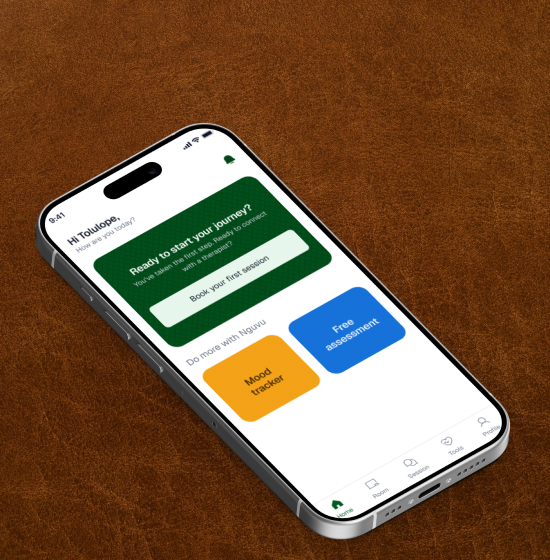
Affordable therapy, anytime, anywhere
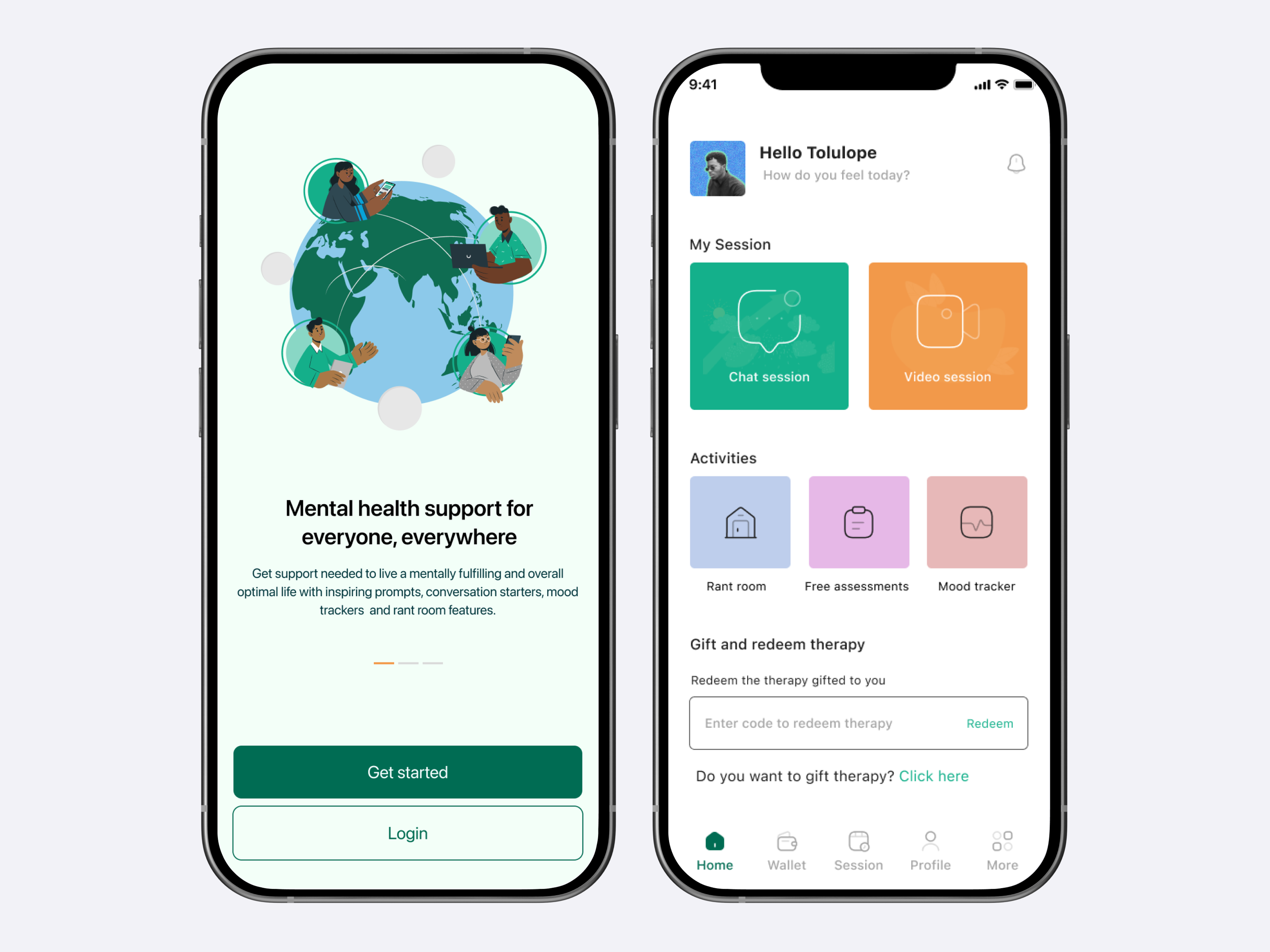
When Nguvu Health launched in May 2020, therapy in Africa was expensive, stigmatised, and for most people simply out of reach. I was brought in to change that — designing the Android and iOS app end-to-end and shipping it in 8 weeks, collaborating with engineers, therapists, and content developers. By 2022, I'd grown into Product Lead, scaling the team to five and helping take the product to 12,000 users and $200k in funding.
The numbers that followed
User growth
More than double our user target reached
Target was to reach 5,000 users in the first year. The product more than doubled that.
Paid therapy sessions
900+ paid sessions in just 6 months
The target was 1,000 paid sessions within 6 months of launch. Reaching 900+ validated that users were committing to their mental health.
App store rating
Rated 4.7★ across both app stores
We aimed for a 4.5 average across both stores. Exceeding it signalled that the experience felt right for an audience that had never used anything like it before.
Funding raised
$200k raised from ODX and Google
Nguvu Health was accepted into ODX and Google for Startups. A direct reflection of the product's traction and early potential.
Breaking barriers to mental healthcare in Africa
Across Africa, therapy wasn't just expensive, it was culturally inaccessible. The few digital solutions that existed were built for western markets, priced accordingly, and carried no cultural relevance.
Why it is important
Mental health directly affects how people work, connect, and function. Left unaddressed, the consequences ripple beyond the individual — into communities, and economies. Africa has one of the world's youngest populations, and without accessible mental healthcare, an entire generation risks going unsupported.
Affordability
Therapy was viewed as a luxury most Africans simply couldn't afford.
Stigma
Fear of being judged kept many people from ever seeking help.
Awareness
Most people didn't know what mental health issues they had or where to start.
Understanding the problem before solving it
Before sketching a single screen, I needed to understand who I was designing for and what already existed. I explored both the human and market landscape — grounding the product in real needs rather than assumptions.
Research methods
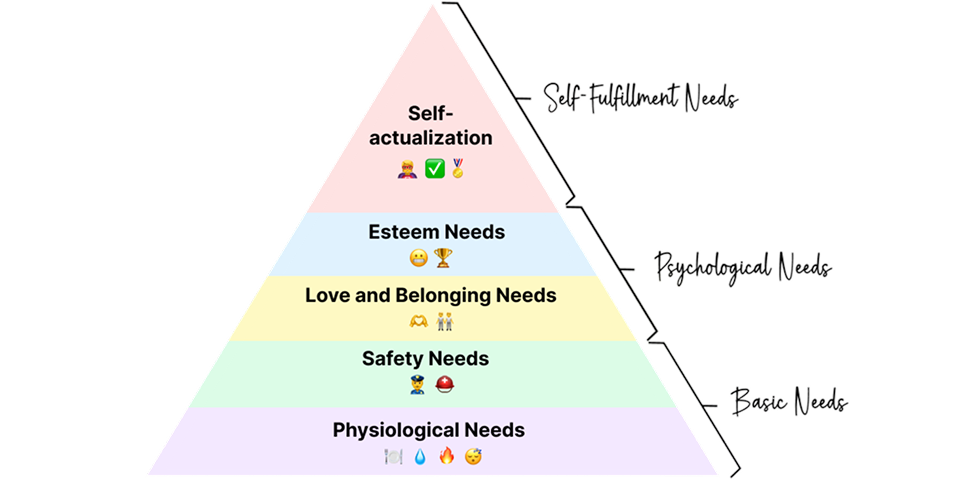
Maslow's hierarchy of needs
As secondary research, I explored Maslow's hierarchy to understand where mental health sits in human existence. Mental health cuts across all three levels — safety, belonging, and self-fulfilment — which meant the product had to address all three, not just therapy access.
User interviews
I spoke directly with several Africans to hear the problem in their own words. People wanted help but faced real barriers — cost, fear of judgement, and no awareness of what support existed. Three themes surfaced consistently across every conversation: affordability, stigma, and education.

Competitive analysis
I reviewed existing mental health apps to identify gaps in the market. Solutions I found was priced for western markets, lacked cultural relevance for Africans, and focused more on coaching and meditation than actual therapy, leaving a clear opening for something built specifically for this audience.
Key findings
No cultural fit
Every existing solution was built for Western markets with no relevance to African users.
Affordability gap
Therapy was priced as a luxury, putting it out of reach for the majority.
Trust barrier
Users needed to feel safe before they would engage. Privacy and anonymity weren't optional.
Education void
Most users didn't know what support was available or how to identify their own needs.
The principles that guided every decision
Earn trust before asking for anything. Privacy and security had to be built in from the start — not added later.
Make cost a choice, not a barrier. Therapy was priced by session type and length so users could access what they could afford.
Educate before you convert. Users needed to understand their mental health before they could commit to addressing it.
Safety enables expression. People only open up when they feel protected — anonymity and community controls made that possible.
Features mapped to real users needs
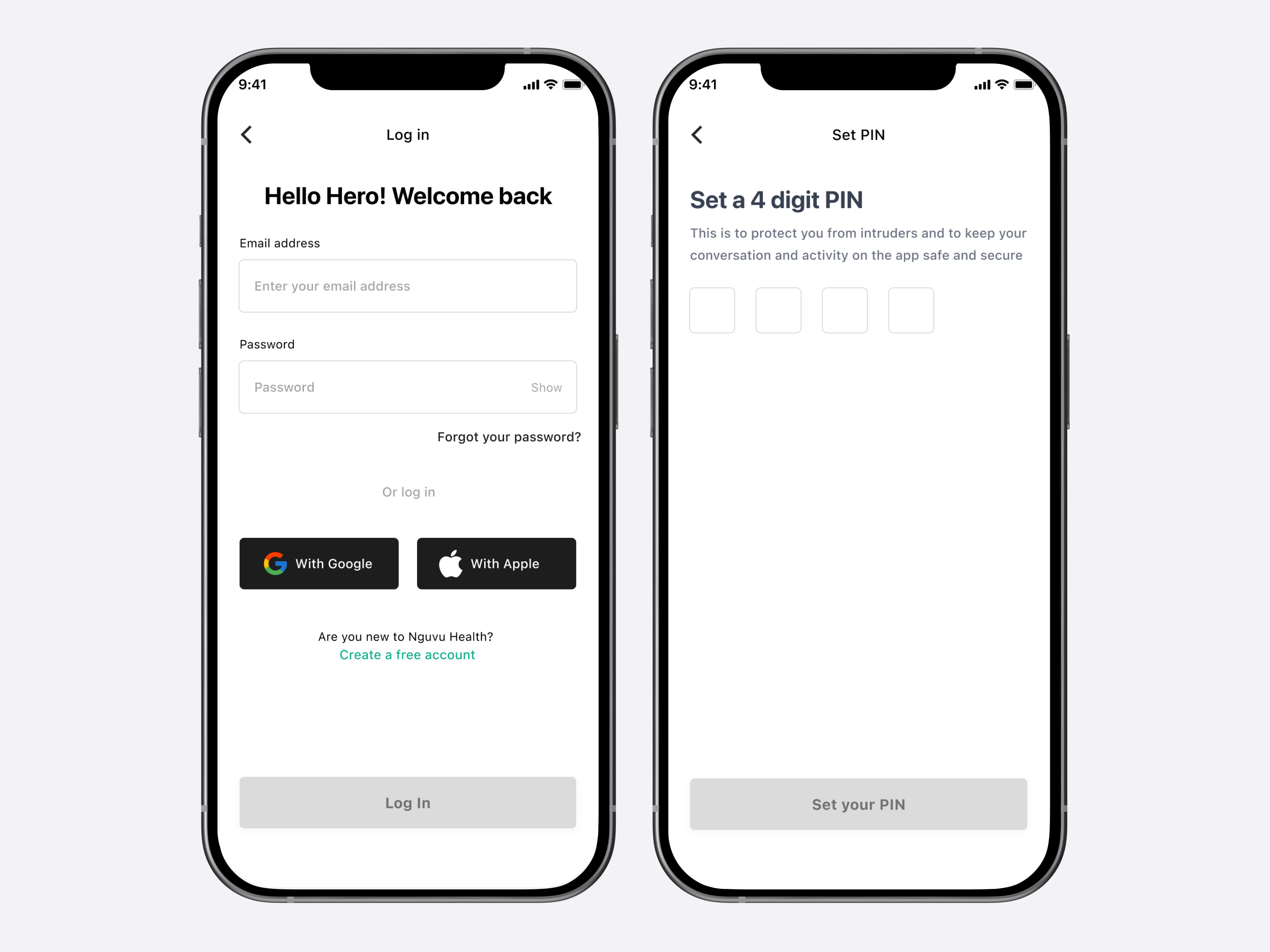
Secure onboarding
Gets users set up quickly via social login or email, with PIN security on every login to protect their conversations. Trust is the first barrier. Users needed to feel safe before sharing anything personal.
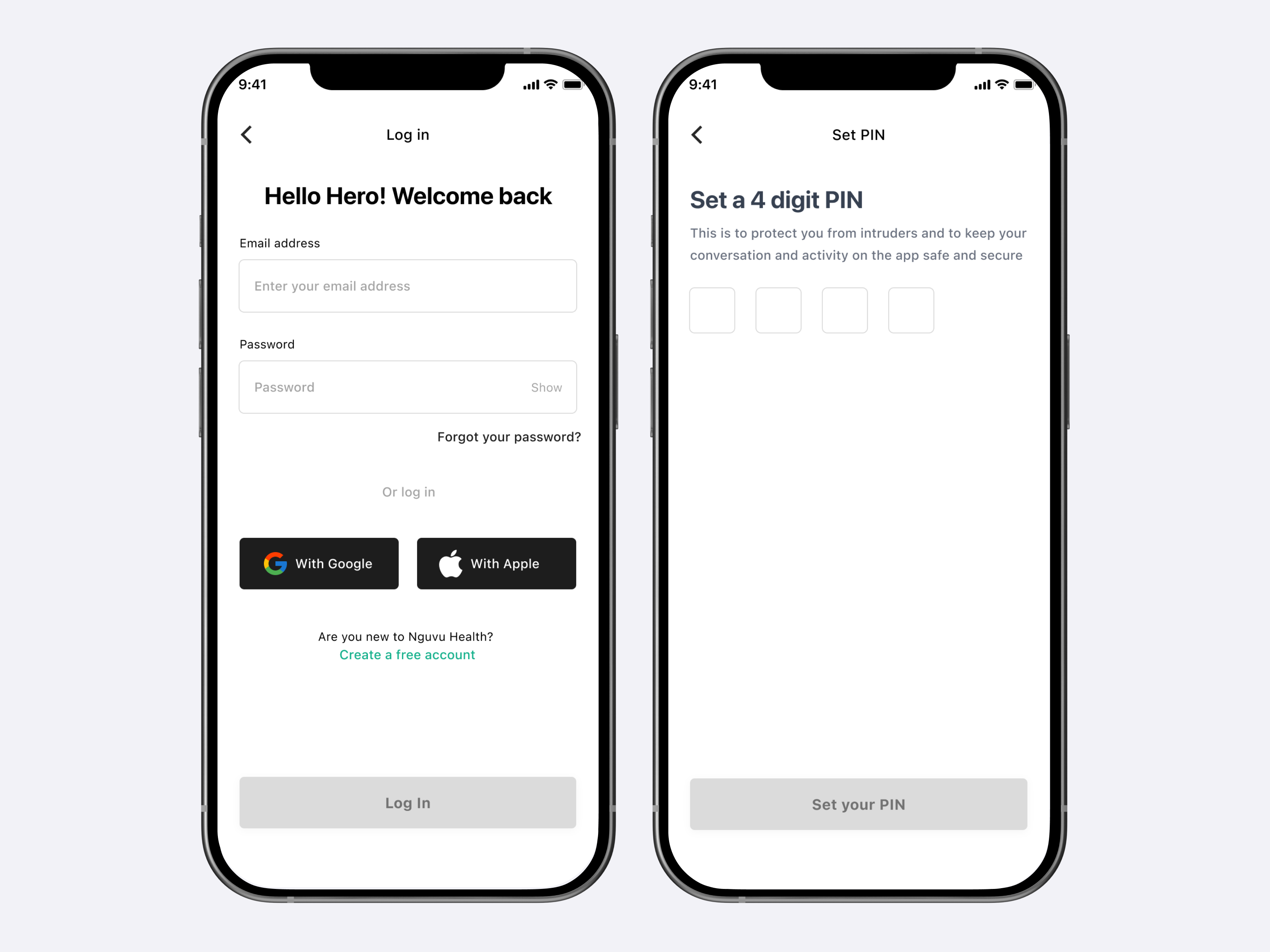
Free assessment
A short quiz that educates users about their mental health and delivers a personalised result with a CTA to book a paid session. 18% of quiz completers converted to paying customers — making it the product's strongest conversion tool.
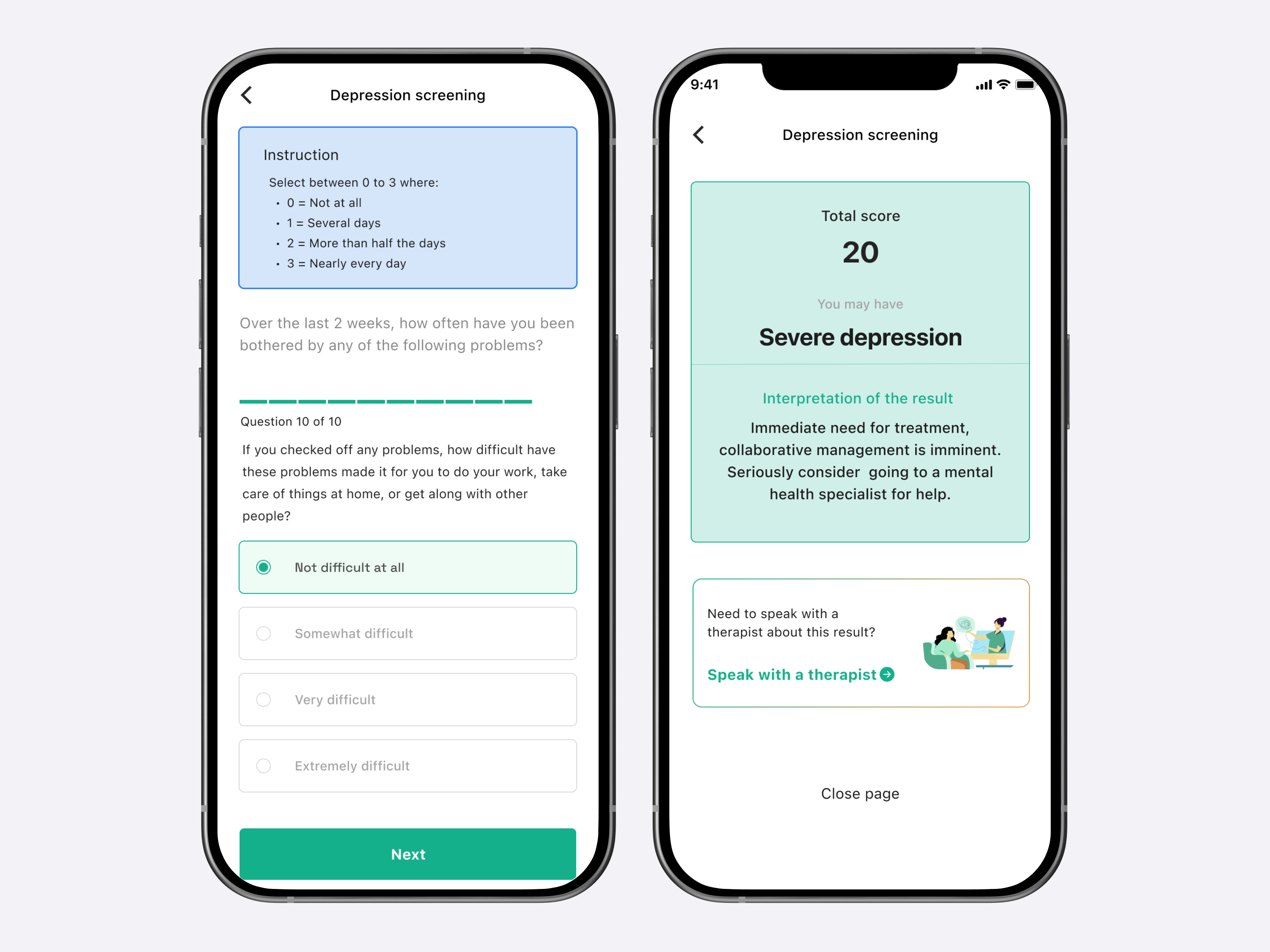
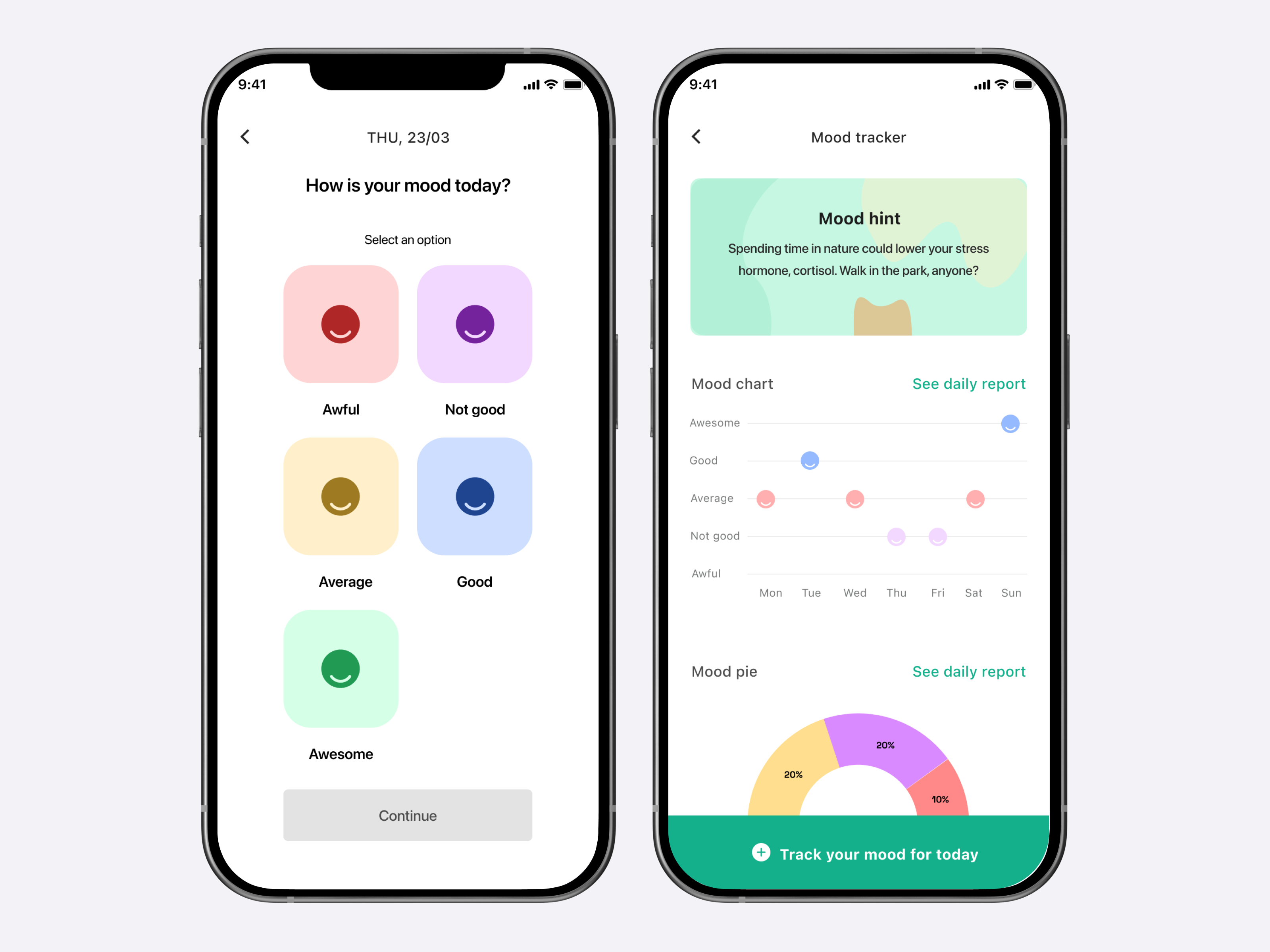
Rant Room, diary & mood tracker
A safe community space for anonymous expression, a diary for private thoughts, and a mood tracker to build self-awareness over time. Users needed more than therapy — they needed a space to be heard without fear of judgement.
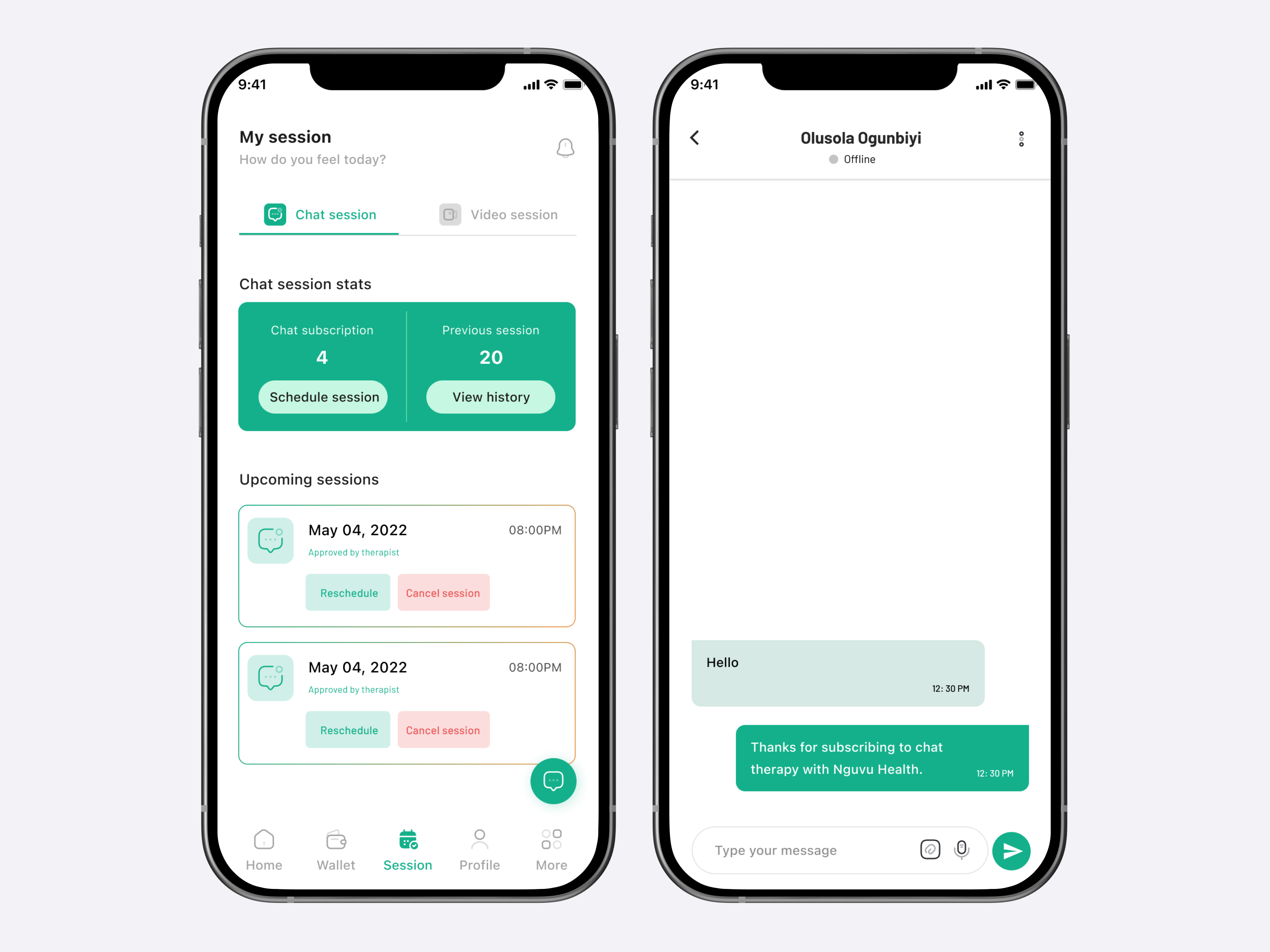
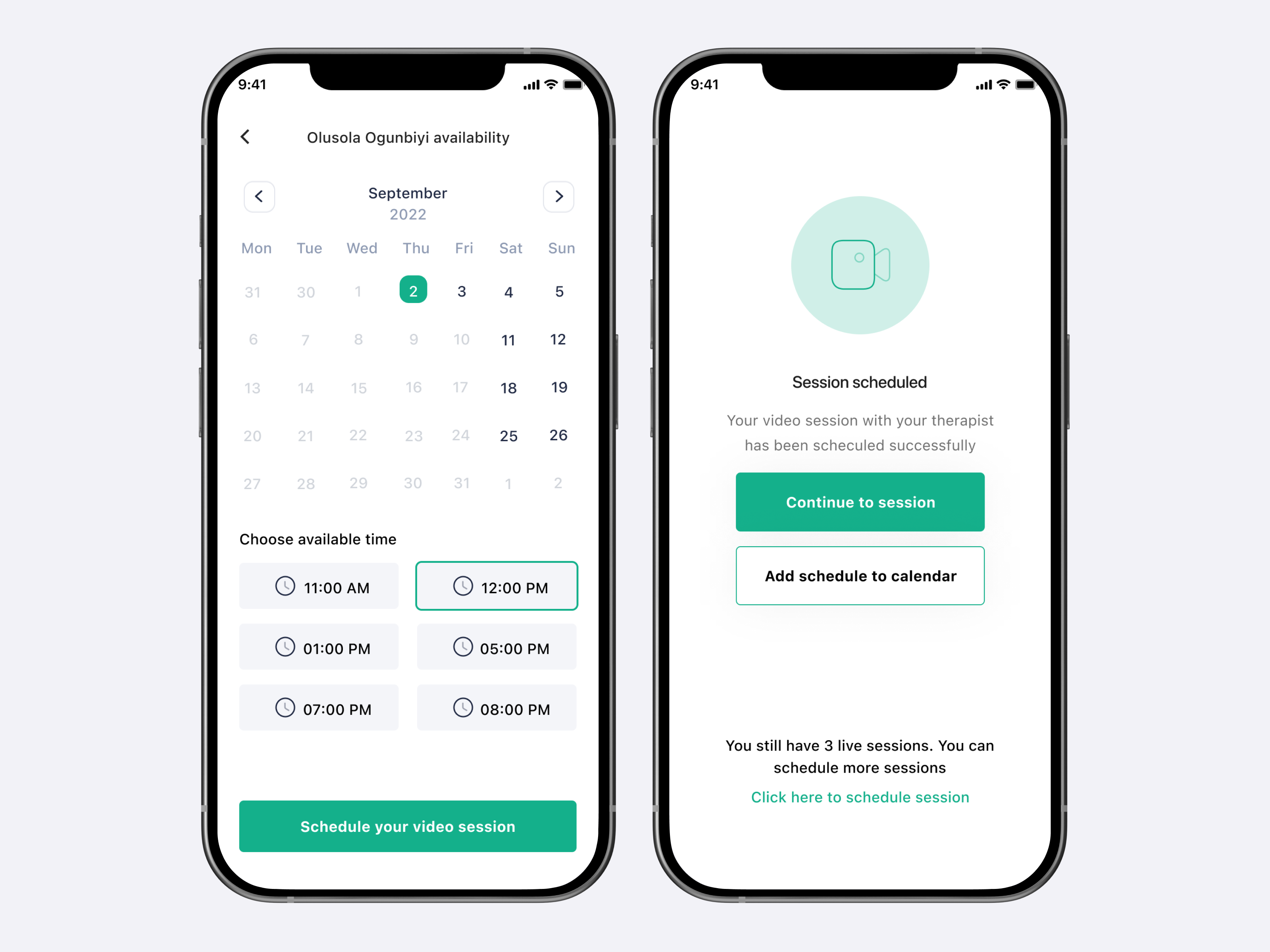
Therapy scheduling
Therapy priced by session type and length, with therapist availability, seamless booking, and calendar sync with Google and Apple. Removing cost and scheduling friction made therapy feel accessible rather than aspirational.
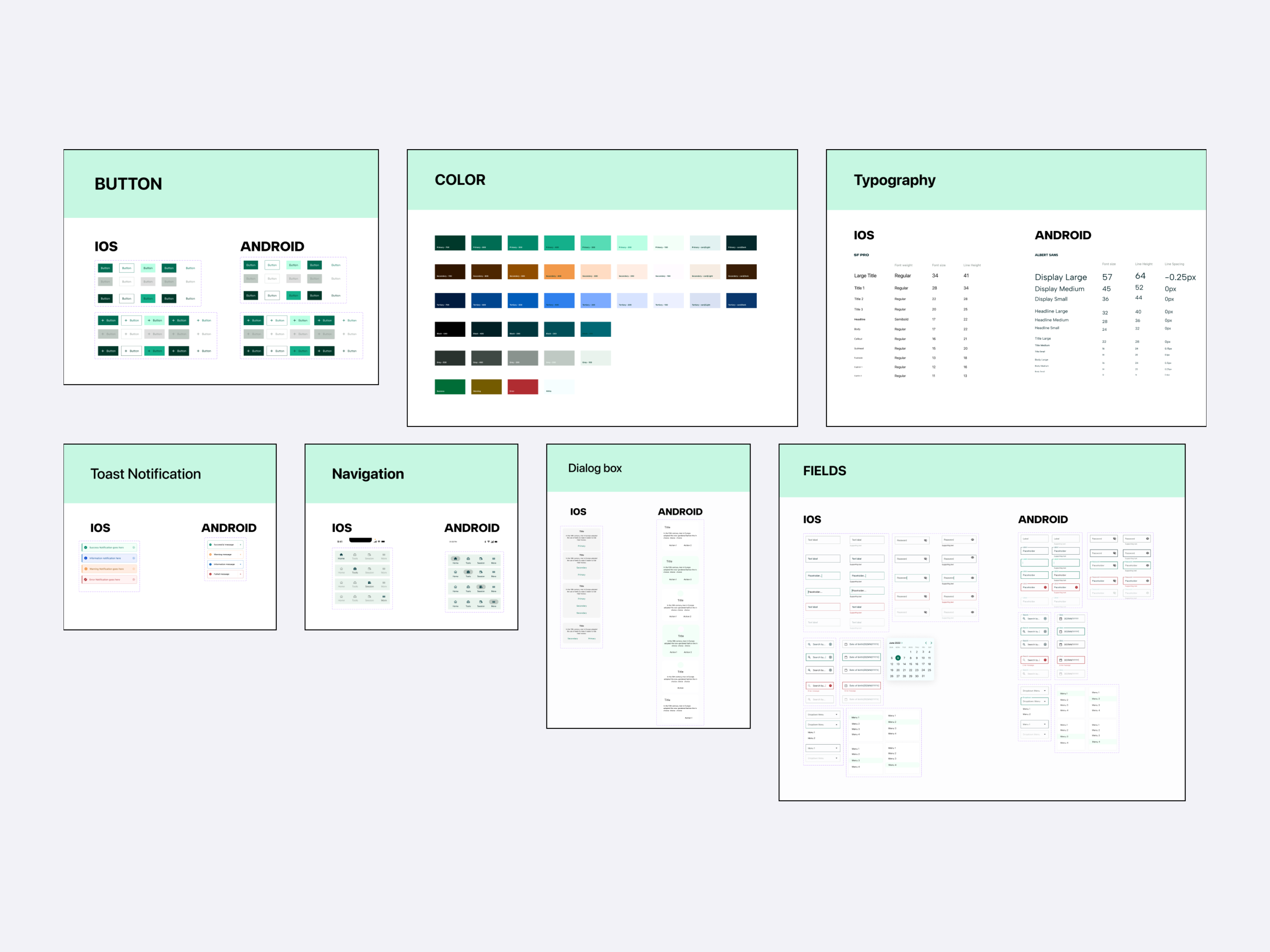
Feelings design system
A full component library built from scratch and documented for the growing team. As more designers joined, a shared system ensured consistency and consistent delivery.
What testing changed
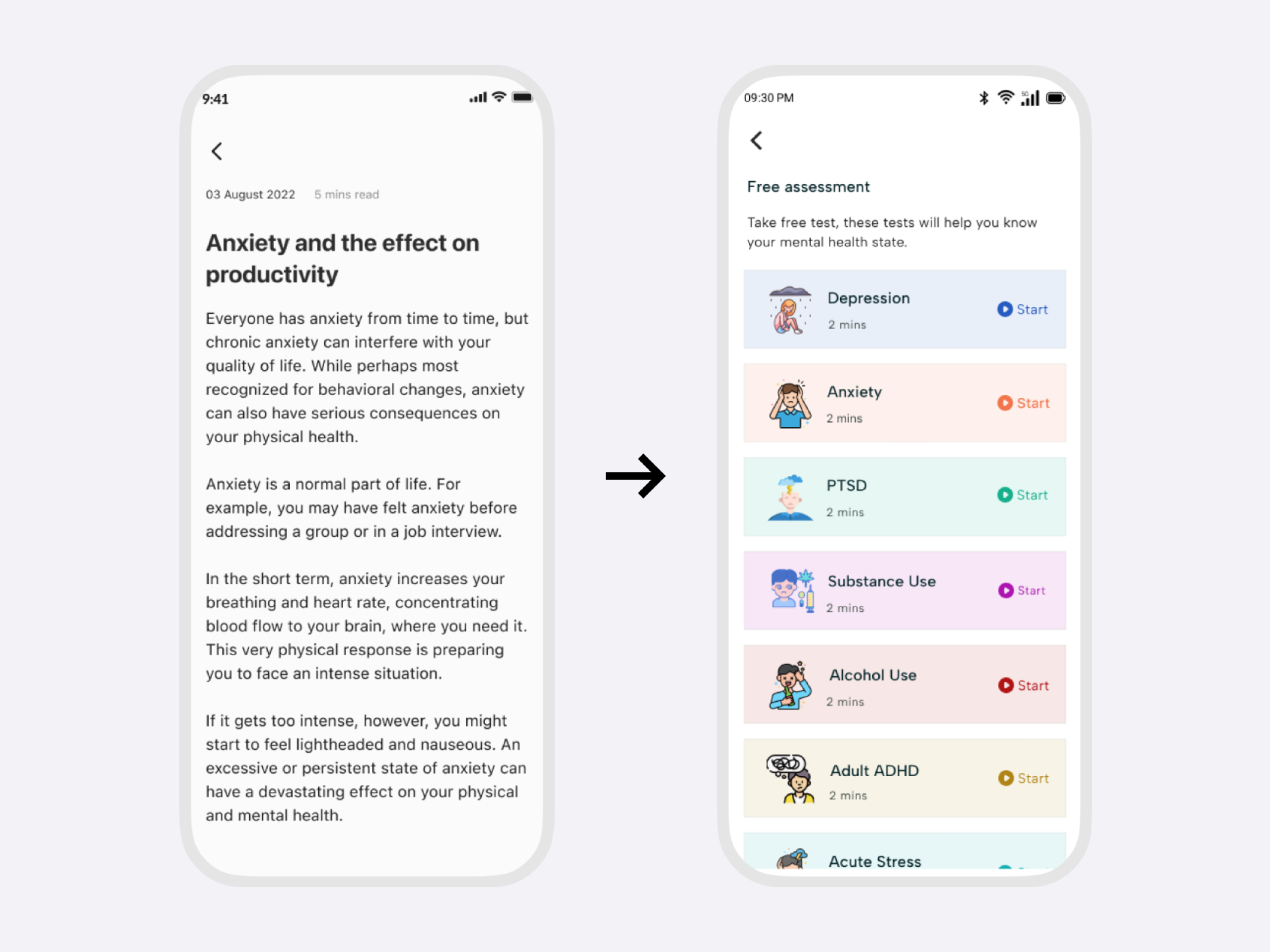
Long articles → Free assessment
80% of testers didn't want to read long articles about mental health. Replaced with a short, guided quiz built in collaboration with our lead therapist. The assessment became the product's strongest conversion tool — 15% of completers booked a paid session directly from the results screen.
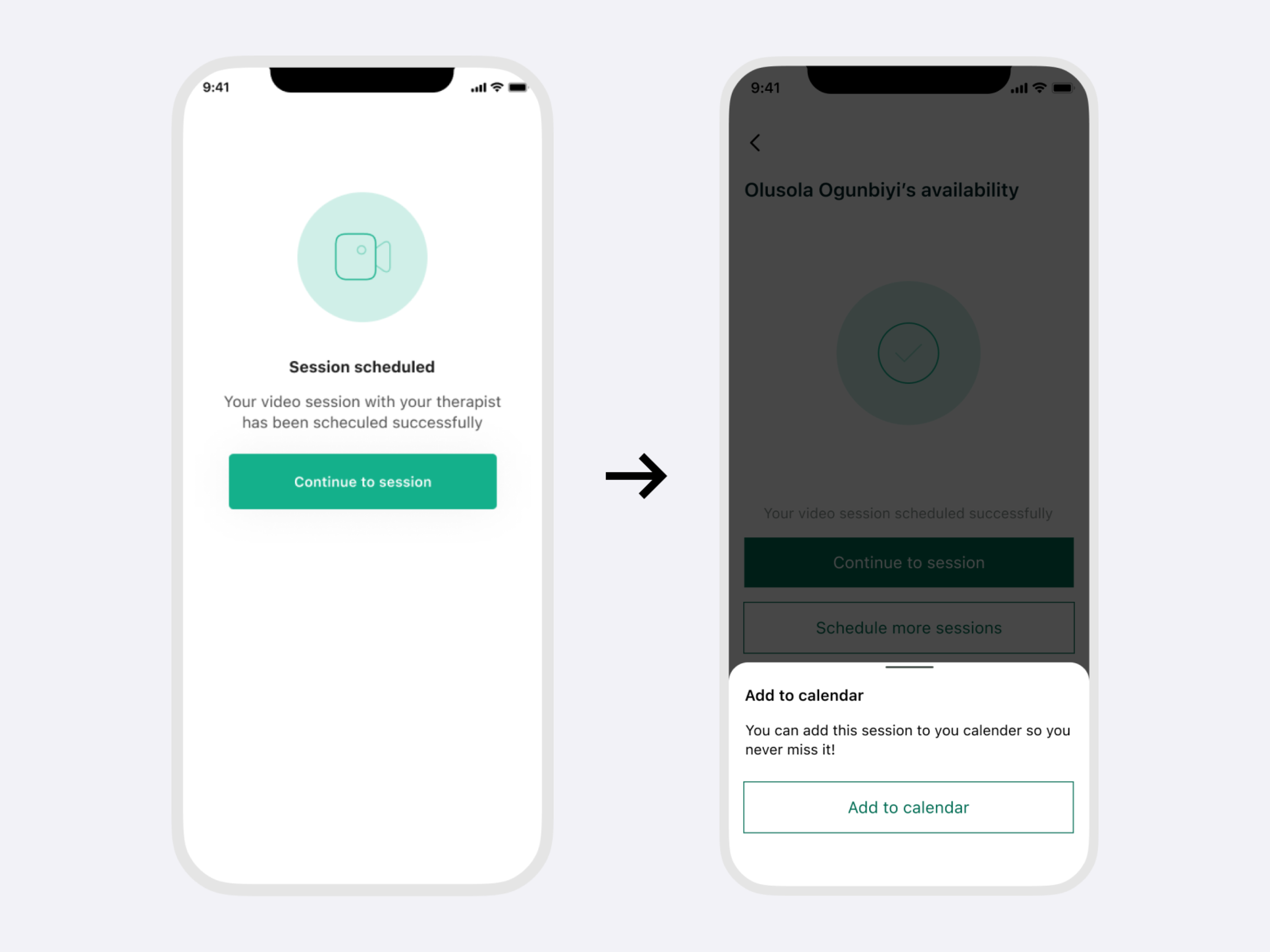
Carousel → List view for therapists
Testers were defaulting to the first therapist in the carousel without reading further. Switched to a list view with expanded profiles. Choosing a therapist is a personal decision. The design needed to support an informed choice, not a convenient one.
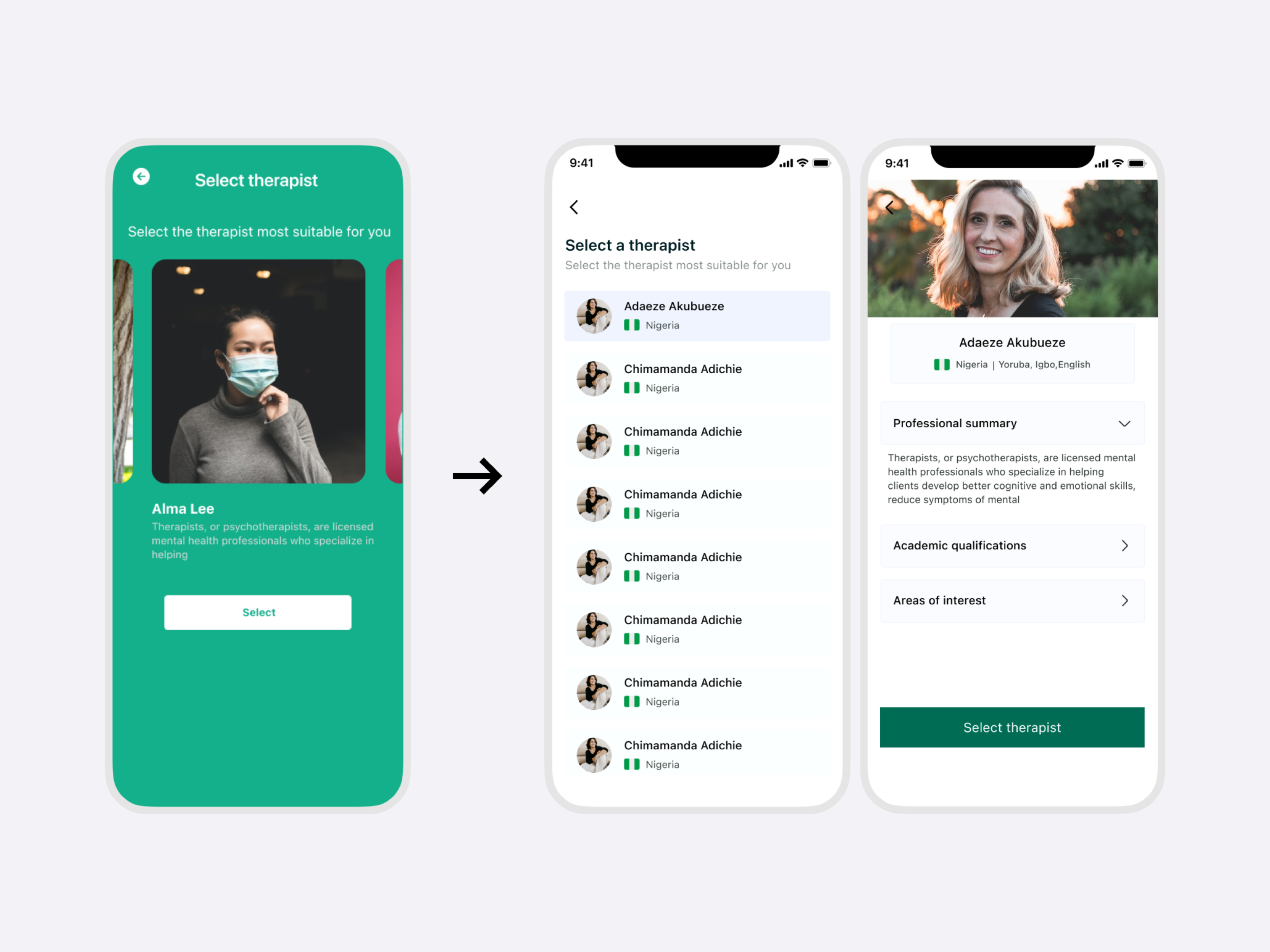
Booking confirmation → Calendar sync
A participant asked how they'd remember their session. Built Google and Apple calendar sync with push notifications and email reminders into the booking flow. A missed session is a broken promise. Removing that risk directly improved retention and trust.
Looking back
This was one of the most formative projects of my career. Designing for an underserved audience in 8 weeks forced me to make fast, research-backed decisions — and growing into Product Lead taught me what it means to own a problem beyond the screen.
Trust is the foundation, not a feature.
Users won't engage with a mental health product unless they feel safe. Security and anonymity had to come first.
Constraints sharpen decisions.
An 8-week deadline removed the luxury of overthinking. It pushed me to prioritise ruthlessly and validate quickly.
Good design earns you a bigger seat.
Caring about the whole problem — not just the UI — was what led to becoming Product Lead. Design thinking scales beyond screens.